Emergency guide
Emergency Electrician
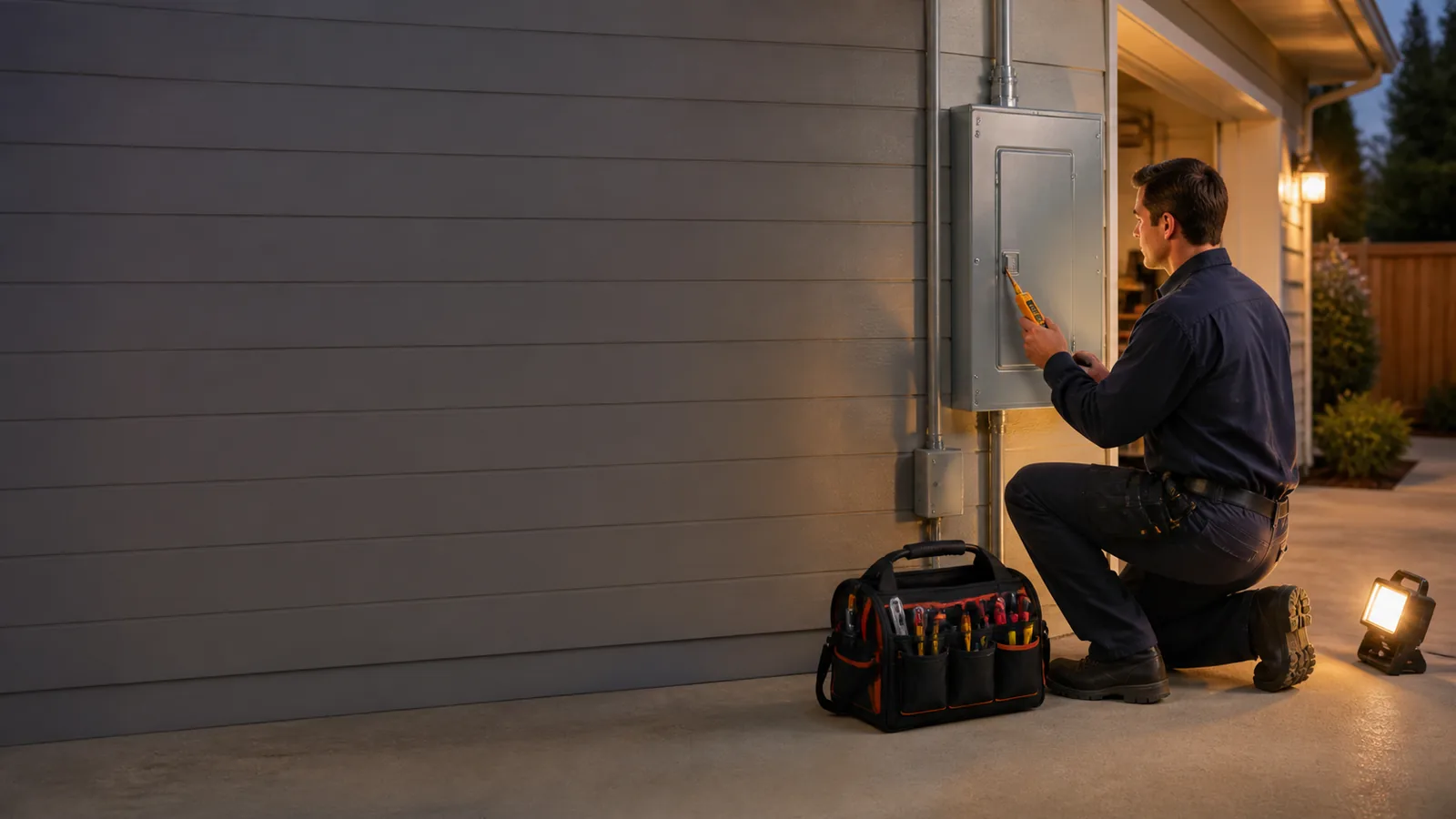
Urgent electrical service is for time-sensitive problems that should not wait for routine scheduling. The visible warning sign may come from a device, branch circuit, panel, customer-owned service equipment, or the utility system.
Updated July 26, 2026
Emergency Electrician, explained
The key decision is: Is the condition an immediate life-safety hazard, a utility issue, or an urgent electrician service call? A useful urgent-service request separates an active life-safety event, a utility outage, and customer-owned electrical equipment that needs an electrician.
Start with the affected equipment or area, the visible condition or desired result, and any recent change. The sections below explain the scope choices and quote details that matter for emergency.
When urgent electrician service fits
Use the visible condition and where it originates to distinguish urgent electrician work from a utility interruption or an active life-safety event.
Needs and situations this service covers
- I smell burning or see sparks
- You smell burning or see smoke near outlets, switches, or the panel
- Outlets or the panel are sparking or hot to the touch
- Wiring is exposed, damaged, or has been hit by water
- Power is lost in part of the home in a way that seems unsafe
What can change the scope
- Overheated or arcing connections
- Water intrusion into outlets, fixtures, or the panel
- Damaged or chewed wiring
- Failing breakers or panel components
- The electrician can trace the warning sign to a device, connection, circuit, panel component, or connected equipment.
- Hot, damaged, loose, buzzing, scorched, or water-exposed devices may require circuit testing and repair beyond device replacement.
Is the condition an immediate life-safety hazard, a utility issue, or an urgent electrician service call?
The first visit may isolate a hazard, complete a defined repair, or identify additional work needed for a lasting correction. The scope should distinguish immediate stabilization from the permanent repair.
Burning odor, heat, or arcing diagnosis
The electrician can trace the warning sign to a device, connection, circuit, panel component, or connected equipment.
Outlet and switch hazards
Hot, damaged, loose, buzzing, scorched, or water-exposed devices may require circuit testing and repair beyond device replacement.
Breaker and panel problems
Repeated trips, failed resets, heat, noise, damage, or partial power loss can involve breakers, connections, bus components, or service equipment.
Storm and service-equipment damage
Customer-owned weatherheads, masts, service conductors, disconnects, panels, and grounding may need inspection and utility coordination.
Water-exposed electrical components
Affected devices, wiring, panels, controls, and equipment may need isolation, evaluation, repair, or replacement before reuse.
Temporary stabilization and permanent repair
When the complete repair cannot be finished during the first visit, the electrician should explain what was made safe and what work remains.
Useful observations and electrical safety boundaries
Share what you can observe without opening equipment or touching wiring. Energized testing, disassembly, and repair belong to a qualified electrician.
Useful details to note
- Where the odor, heat, noise, sparks, damage, or power loss first appeared
- Which rooms, devices, or circuits stopped working and what was operating beforehand
- Whether nearby properties also lost power or the issue appears limited to this property
- Whether water, a storm, construction, an appliance failure, or recent electrical work preceded the problem
- Move away from the affected area and keep others clear
- If it's safe and accessible, turn off the affected circuit or main power
Leave these steps to an electrician
- Do not keep using or repeatedly testing hot, sparking, scorched, buzzing, or burning-smelling equipment
- Do not touch wet electrical parts, exposed wiring, damaged service equipment, or downed lines
- Do not open panel covers or dismantle outlets, switches, fixtures, or energized equipment
- Do not keep resetting a breaker that trips again or shows another warning sign
- If there is an active fire, leave the building and contact emergency services.
- Never touch sparking, scorched, or water-exposed electrical components.
Warning signs to mention when requesting help
There is active fire, visible smoke, or a serious electrical injury; Immediately, for burning smells, smoke, sparks, or hot panels; When wiring is exposed or has contacted water; When power loss is paired with any warning sign; Whenever you feel the situation is unsafe.
How urgent electrical work is evaluated
The first objective is to understand the active condition, isolate the affected area when appropriate, and distinguish immediate stabilization from permanent repair.
- 1
Confirm the warning sign and location
Review what happened, what is affected, whether the condition is active, and any storm, water, appliance, or recent-work context.
- 2
Establish a safe work area
Keep people away from the affected equipment and determine how the electrician can inspect it without extending the hazard.
- 3
Isolate the affected equipment or circuit
Use qualified procedures to separate the problem area from energized equipment before detailed testing or disassembly.
- 4
Trace the cause
Inspect and test the device, wiring, circuit protection, panel, connected load, and service equipment that could explain the warning sign.
- 5
Define stabilization and repair
Explain what can be completed now, what must remain out of service, and whether parts, permits, inspection, or utility coordination are needed.
- 6
Verify the completed scope
Test repaired equipment, document any remaining restrictions, and provide the next step for deferred or follow-up work.
- 7
Get to safety
Keep everyone clear of the affected area and stop using the equipment or circuit involved.
Get urgent electrician help
Call or request availability to connect with electrician help.
What affects emergency cost
Emergency and after-hours work is typically priced differently from scheduled visits because of the urgency and timing. Treat published ranges as planning references rather than a quote for a particular property.
Time of day and how urgent the response is
Severity and source of the hazard
Parts and repairs required after stabilization
Whether the panel or service wiring is involved
| Scope | Typical range | What it usually involves |
|---|---|---|
| After-hours diagnosis | $225-$625 | Urgent visit and assessment |
| Urgent repair | $500-$1,900 | Stabilizing and repairing the hazard |
| Major emergency work | $1,750-$8,250 | Panel/service issues or extensive damage |
Cost ranges are estimates developed from standardized project scopes and reviewed pricing inputs. Government labor and regional cost data are used where applicable. See our Pricing Methodology for the exact sources, calculations, and review date. Actual prices vary by property, scope, materials or equipment, location, and provider.
How to compare the written scope and quote
Compare what each proposal includes, what assumptions it makes, and how findings that change the scope will be handled, not only the total price.
- What immediate condition was found and how was it isolated or stabilized?
- What diagnostic time, after-hours charge, or minimum service charge applies?
- Which devices, breakers, wiring, panel components, or service equipment are included?
- Is the proposed work a complete repair or a temporary measure pending follow-up?
- What equipment or area must remain out of service?
- Are parts, permits, inspections, utility coordination, and return visits included?
- What conditions could require a revised scope or additional work?
- What documentation and workmanship or parts warranty will be provided?
Common issues related to emergency
Choose the closest visible symptom for a focused explanation of urgency, useful observations, and the service that may fit.


Emergency Electrician: common questions
What should I do first in an electrical emergency?
Stop using the affected area and keep others clear. If there is an active fire, leave the building and contact emergency services. Otherwise, turn off the affected circuit only when it is safe and accessible, then connect with urgent electrician help.
Should I turn off the main breaker?
Only if the panel is safe to reach and isn't itself hot, sparking, or wet. If reaching it means getting near the hazard, stay clear and wait for help.
Is 24/7 emergency help always available?
Availability varies by location and provider. ElectricianQuotes helps you connect with urgent electrician help in your area as quickly as possible, but we can't guarantee around-the-clock service everywhere.
A breaker keeps tripping, is that an emergency?
A breaker doing its job isn't necessarily an emergency, but if tripping comes with heat, burning smells, or scorch marks, treat it as urgent and stop using the circuit.
Sources and editorial review
Service guidance is checked against the government, safety, and consumer sources below. Equipment instructions, site conditions, and the requirements that apply to a specific address can still change the right scope.


Helpful resources
Plan emergency with clearer information
Use these related guides to understand the scope, prepare useful questions, and compare electrical proposals.
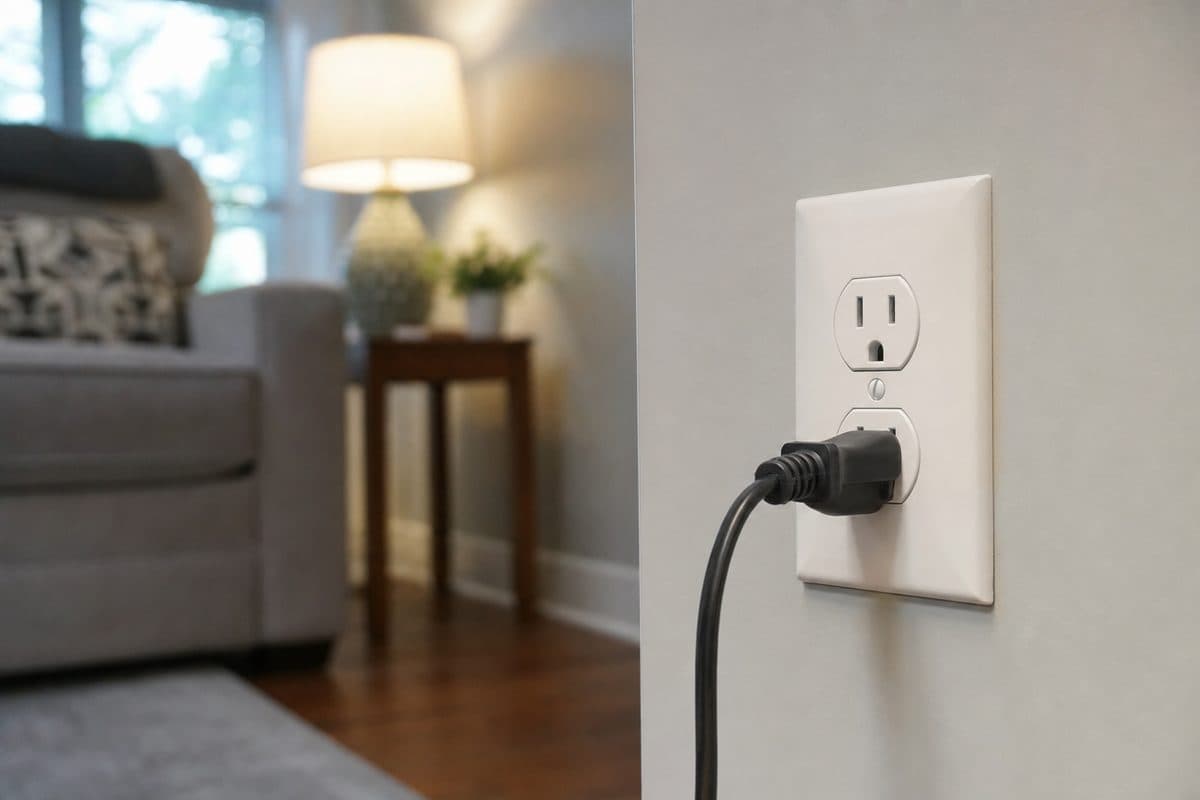
Why Is My Outlet Warm?
A warm outlet can come from heavy use, a failing device, a loose connection, or an overloaded circuit. Knowing which warning signs matter can help you stop using the outlet and request the right kind of electrician help.
Read guide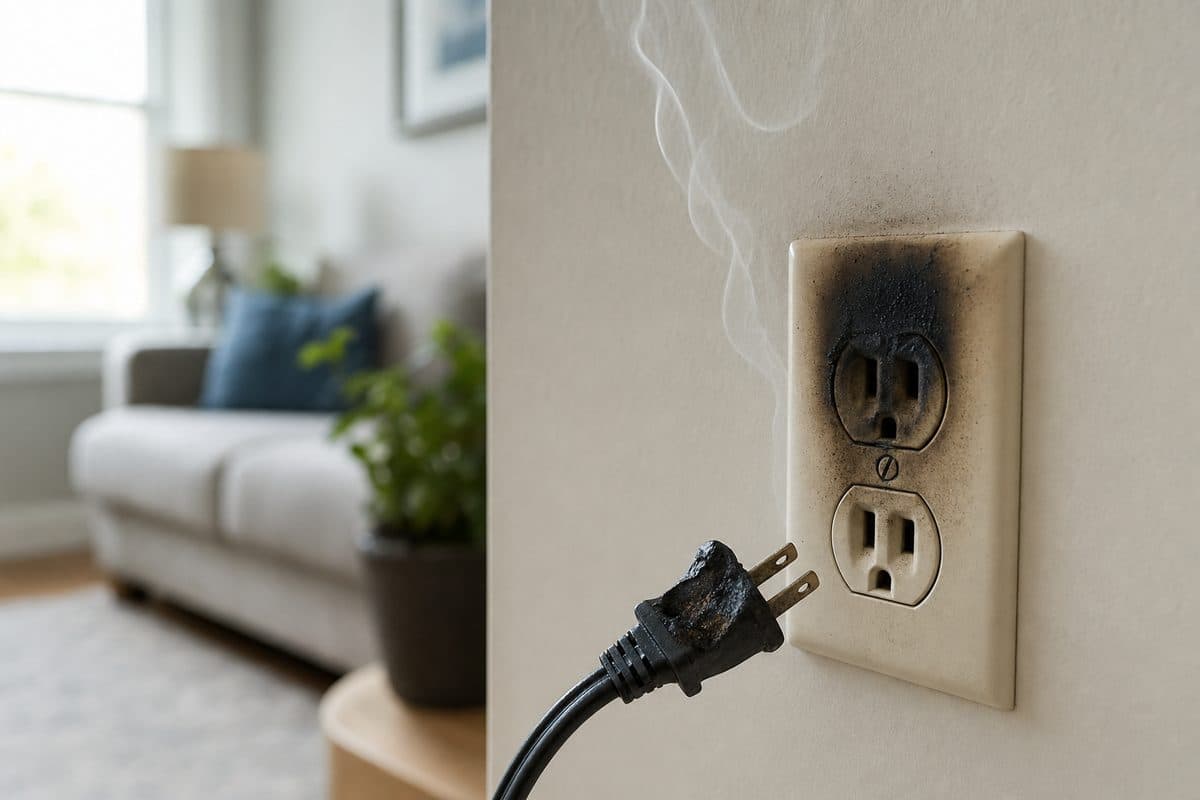
Burning Smell From an Outlet: What to Do
A burning or fishy smell from an outlet can point to overheating or damaged wiring. Stop using the outlet, note what you observed, and request urgent electrician evaluation.
Read guide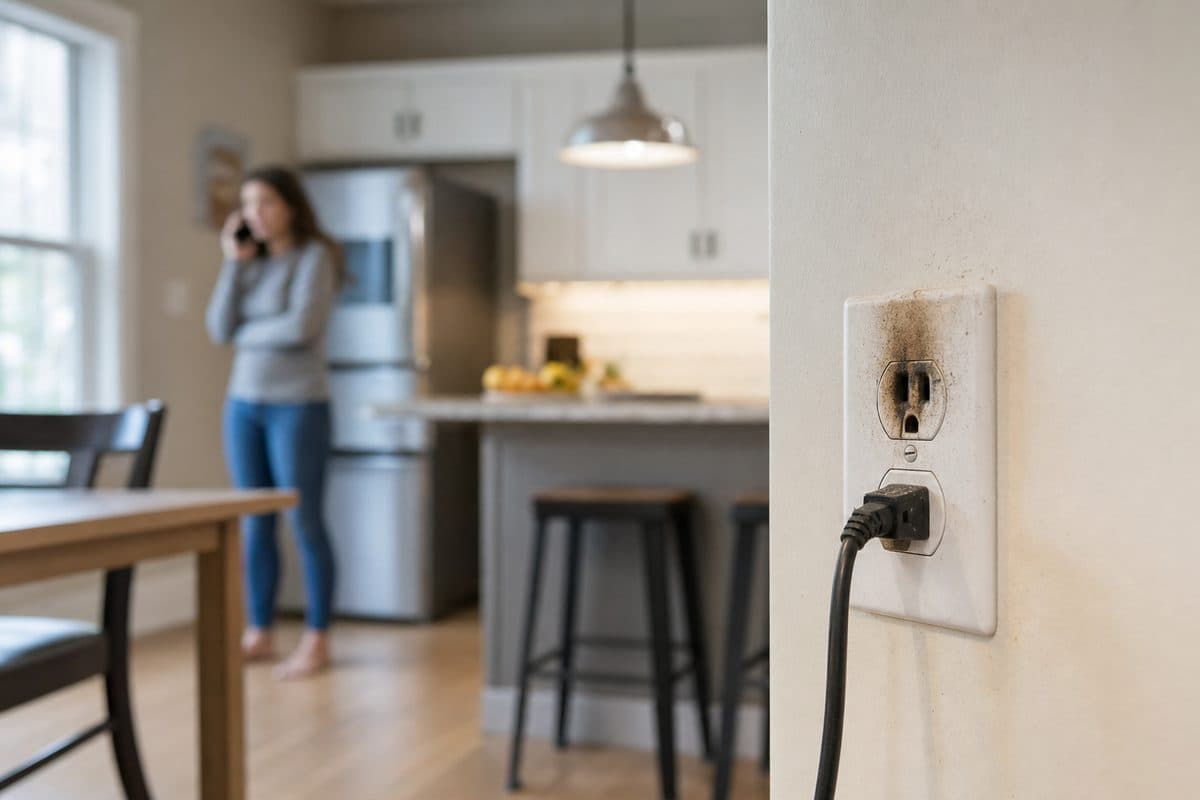
When to Call an Emergency Electrician
Some electrical problems can wait for a scheduled visit; others cannot. Here is how to recognize a true electrical emergency and what to do first.
Read guide
What to Do If a Breaker Keeps Tripping
A tripping breaker is doing its job, but one that trips again and again is telling you something. Here is what is safe to check and when to get help.
Read guideNationwide coverage
Emergency Electrician by state and city
Select a state or popular city to view emergency guidance and check electrician availability in that area.
Get urgent electrician help
Call or request availability to connect with electrician help.
Call (833) 962-0486 to talk through the electrical problem and check electrician availability.