Updated July 25, 2026Sources reviewed July 31, 20268 min read
Choosing between an electrician and a handyman is not just about convenience or price. When a job involves wiring, panels, circuits, or safety devices, a qualified electrician is usually the right choice because the work can affect fire risk, shock risk, permits, insurance questions, and what shows up during a future inspection.
Why the distinction matters
Electrical work is different from cosmetic home tasks because mistakes may stay hidden until they cause tripped breakers, damaged equipment, failed inspections, or unsafe conditions. A handyman may be appropriate for general property upkeep, but work that changes, diagnoses, repairs, or installs electrical components should be evaluated carefully and often routed to a qualified electrician.
Work that should usually go to an electrician
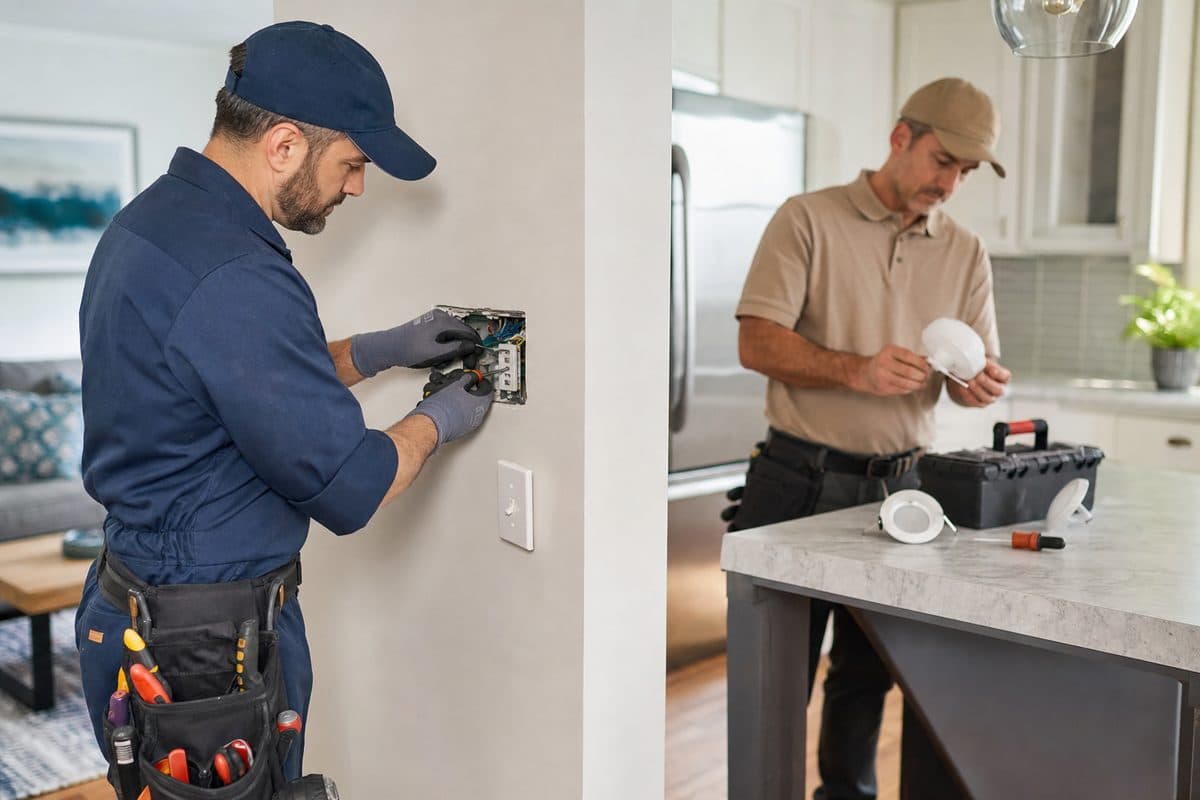
If the project involves electrical diagnosis, new wiring, changing existing wiring, service equipment, protective devices, or any connection that could affect the safety of the system, a qualified electrician is the safer and more defensible option. This is especially important for work that may require permits or inspection, or that could be reviewed later by a home inspector or insurance company.
- Troubleshooting breakers that trip, flickering lights, dead outlets, or partial power loss
- Any work involving the panel, breakers, service equipment, grounding, or circuit protection
- Installing or replacing hardwired lighting, fans, smoke alarms, or dedicated circuits
- Adding outlets, moving outlets or switches, or extending circuits to new areas
- Wiring for large appliances, EV chargers, generators, sheds, garages, or remodels
- Correcting unsafe conditions flagged during an inspection, appraisal, or insurance review
When a handyman may be appropriate
A handyman may be a fit for non-electrical tasks around an electrical project, provided the work does not involve opening electrical equipment, altering wiring, or making electrical connections. Exact limits vary by city, county, and state, so it is smart to verify local licensing and permit rules before hiring anyone.
- Patching or painting a wall after an electrician completes work
- Installing shelving or trim near, but not into, electrical components
- General carpentry, drywall, caulking, or finish work unrelated to wiring
- Coordinating access, cleanup, or other non-electrical parts of a home improvement job
Permits, licensing, and liability
One of the biggest differences between hiring a handyman and hiring an electrician is how the work is documented and regulated. Requirements can vary by city, county, and state, and they can also vary based on the size and scope of the job. FTC consumer guidance supports checking state or county licensing, requesting proof of insurance, getting multiple written estimates, and reviewing a complete written contract before work begins.
- Check whether the provider's trade license matches the type of work proposed
- Ask whether permits or inspections may apply in your area
- Request proof of insurance, and confirm the name matches the business you are hiring
- Get more than one written estimate so you can compare scope, not just price
- Review the contract for materials, labor, cleanup, change orders, and payment terms
How this affects resale and inspections
Electrical work often becomes more important when you sell, refinance, remodel, or file an insurance claim. Buyers, inspectors, and underwriters may look for visible workmanship issues, missing documentation, or signs that work was done outside the usual trade process. Even if a problem seems minor today, unclear records can create delays, negotiation issues, or requests for additional evaluation later.
What a useful quote should include
A good electrical quote should help you understand what the professional plans to evaluate, what is included in the price, and what might change if hidden conditions are found. ElectricianQuotes can help connect you with providers for comparison, but pricing, scope, and availability vary by location and company.
- A clear description of the issue or project area
- Whether the visit is diagnostic, repair, installation, or a combination
- The expected scope of work and what is excluded
- Material allowances or named components, if known
- Whether permit handling or inspection coordination is included
- Labor charges, trip or diagnostic fees, and how change orders are handled
- Cleanup responsibilities, timeline expectations, and payment schedule
How to make the next call
If the job affects wiring, power distribution, protective devices, or hardwired equipment, start by speaking with a qualified electrician and ask for a written estimate. If your project is mostly cosmetic or finish work around an electrical job, you may also compare a handyman for the non-electrical portion, but keep the electrical scope separate so responsibilities, safety, and documentation stay clear.
Need help with electrician?
Call ElectricianQuotes or check availability online for help with your electrical project.
Frequently asked questions
Can a handyman replace an outlet or switch?
Rules vary by location, and even small-looking electrical tasks can involve wiring and safety risks. Because replacing outlets or switches involves electrical connections, many homeowners choose a qualified electrician, especially if permits, inspections, or future resale questions may matter.
Why does licensing matter for electrical work?
Licensing helps you confirm that the provider is authorized for the type of work being proposed under local rules. FTC guidance also supports checking state or county licensing, asking for proof of insurance, getting multiple written estimates, and reviewing a complete written contract.
Will unpermitted electrical work affect selling my home?
It can. Requirements and disclosures vary by location, but undocumented or questionable electrical work may lead to inspection concerns, requests for further evaluation, repairs before closing, or negotiation over the sale.
What should I gather before requesting quotes?
Note what you are seeing, hearing, or smelling, when the problem happens, which rooms or devices are affected, and whether breakers have tripped. Gather photos if safe to do so, any prior inspection notes, and a short list of questions about scope, permits, insurance, timeline, and what the written quote includes.
Sources and review
Technical and safety facts in this guide were checked against the listed sources on July 31, 2026. Cost and timing language is planning context, not a property-specific quote. Local code, permit, inspection, utility, and product requirements should be confirmed for the project address and equipment. Comparisons and next-step recommendations are editorial planning guidance; on-site findings determine the work.