Ceiling Fans guide
Ceiling Fan Installation
Ceiling fan installation combines electrical work with structural support and mechanical assembly. The fan, mounting system, box and framing, ceiling height and slope, wiring, controls, and access determine the project scope.
Updated July 26, 2026
Ceiling Fan Installation, explained
The key decision is: Can the location support the fan, wiring, controls, and mounting method the project requires? A useful installation scope connects the selected equipment and location to wiring, capacity, access, controls, testing, and finish responsibilities.
Start with the affected equipment or area, the visible condition or desired result, and any recent change. The sections below explain the scope choices and quote details that matter for ceiling fans.
When to plan ceiling fans
Define the equipment, location, intended use, existing conditions, and finish expectations before comparing installation proposals.
Needs and situations this service covers
- I need a ceiling fan installed
- Adding a ceiling fan where there wasn't one
- Replacing an old, wobbling, or noisy fan
- Adding a fan with a light kit or remote
- Improving airflow and comfort in a room
What can change the scope
- Standard light boxes that can't support a fan's weight and motion
- Old fans that wobble, hum, or fail
- Rooms without existing fan wiring or controls
- A desire for energy savings and comfort
- Removal, support verification, wiring inspection, fan assembly, mounting, controls, balancing, testing, and old-fan disposal should be defined.
- The project may require a fan-rated box or brace, support access, wiring changes, wall controls, light-kit coordination, and ceiling repair.
Can the location support the fan, wiring, controls, and mounting method the project requires?
The quote should identify the fan and mounting system, structural support, box, wiring, controls, access equipment, assembly, balancing, testing, and finish responsibilities.
Fan-for-fan replacement
Removal, support verification, wiring inspection, fan assembly, mounting, controls, balancing, testing, and old-fan disposal should be defined.
Light-to-fan conversion
The project may require a fan-rated box or brace, support access, wiring changes, wall controls, light-kit coordination, and ceiling repair.
New fan location
A new location can include framing support, box, wiring route, circuit or switch work, ceiling openings, and finish restoration.
High and sloped ceilings
Downrod length, slope adapter, blade clearance, lift or scaffold access, assembly staging, and final fan height may affect the quote.
Fan and light controls
Separate switches, remotes, receivers, wall controls, dimming, smart features, and manual fallback should be specified.
Existing fan diagnosis
Wobble, noise, intermittent operation, breaker trips, heat, and control failures should be diagnosed before replacement is assumed.
Useful observations and electrical safety boundaries
Share what you can observe without opening equipment or touching wiring. Energized testing, disassembly, and repair belong to a qualified electrician.
Useful details to note
- Fan model, weight, blade span, light kit, control type, and mounting instructions
- Ceiling height, slope, room dimensions, preferred finished fan height, and current fixture type
- Desired wall-switch, remote, fan-speed, light-dimming, and smart-control behavior
- Visible wobble, noise, control failures, or breaker trips noticed during normal use
- Check whether there's an existing fixture box where you want the fan
- Note the ceiling height and whether the fan needs a downrod
Leave these steps to an electrician
- Do not assume an existing light-fixture box is rated to support a fan
- Do not remove the fan or fixture to inspect the box or ceiling support
- Do not keep operating a fan that is loose, severely wobbling, hot, sparking, or scorched
- Do not work from an unsafe ladder or improvised platform
- Fans must be mounted on a fan-rated box, a standard light box isn't enough.
- A wobbling fan can indicate inadequate support and should be checked.
Warning signs to mention when requesting help
There is active fire, visible smoke, or a serious electrical injury; When the box isn't fan-rated or there's no box at all; When new wiring or a separate fan/light control is needed; When the existing fan wobbles, which can indicate a support issue; For high or sloped ceilings that complicate mounting.
How an electrician plans ceiling fans
The exact sequence depends on the selected equipment, existing electrical system, route, access, and findings at the property.
- 1
Review the fan and room
Confirm fan model, weight, blade span, light kit, controls, room size, ceiling height and slope, and desired finished height.
- 2
Inspect support and wiring
Evaluate the existing box and framing support, visible wiring, grounding, controls, ceiling finish, and signs of looseness or damage.
- 3
Plan mounting and controls
Define the fan-rated support, bracket, downrod or slope adapter, wiring changes, wall controls, receiver, remote, and smart features.
- 4
Set access and finish responsibilities
Identify ladders or lifts, ceiling openings, patching, painting, assembly, old-fan disposal, and other trade coordination.
- 5
Assemble and install
Complete support, wiring, fan and light assembly, mounting, blade installation, controls, trim, and cleanup.
- 6
Balance and test
Verify secure mounting, blade clearance, wobble, speed settings, direction, light and dimming, wall and remote controls, and smart functions.
- 7
Plan the fan
Choose the size, style, controls, and location for the fan.
Get ceiling fan installation help
Call or request availability to connect with electrician help.
What affects ceiling fans cost
Replacing an existing fan is a modest job; adding a fan to a new location with wiring, a fan-rated box, and controls costs more. Treat published ranges as planning references rather than a quote for a particular property.
Replacement vs. new location
Whether a fan-rated box must be added
New wiring and separate controls
Ceiling height and access
| Scope | Typical range | What it usually involves |
|---|---|---|
| Replace existing fan | $175-$475 | Where a fan-rated box exists |
| New location (existing box) | $375-$925 | Add a fan with light/fan control |
| New wiring + fan-rated box | $900-$2,400 | New location needing support and wiring |
Cost ranges are estimates developed from standardized project scopes and reviewed pricing inputs. Government labor and regional cost data are used where applicable. See our Pricing Methodology for the exact sources, calculations, and review date. Actual prices vary by property, scope, materials or equipment, location, and provider.
How to compare the written scope and quote
Compare what each proposal includes, what assumptions it makes, and how findings that change the scope will be handled, not only the total price.
- Which fan model, weight, blade span, controls, and mounting configuration is included?
- How will the existing box and structural support be verified or upgraded?
- Are new wiring, separate fan and light controls, remotes, receivers, or smart devices included?
- Are downrods, slope adapters, braces, boxes, light kits, and mounting parts included?
- Are ladders, lifts, scaffolding, ceiling access, and assembly included?
- Who handles openings, patching, painting, old-fan disposal, and cleanup?
- How will mounting, wobble, speed, direction, lighting, and controls be tested?
- What ceiling, support, or wiring condition could change the scope?
Common issues related to ceiling fans
Choose the closest visible symptom for a focused explanation of urgency, useful observations, and the service that may fit.

Ceiling Fan Installation: common questions
Can I put a ceiling fan where a light is now?
Sometimes, but only if the box is fan-rated and properly supported. A standard light box usually can't hold a fan safely, so an electrician typically replaces it with a fan-rated box.
Why does my ceiling fan wobble?
Wobble can come from unbalanced blades, a loose mount, or an inadequate box. Persistent wobble is worth checking, since it can indicate a support problem.
Do I need new wiring for a ceiling fan?
If you're replacing a fan where one already exists, usually not. Adding a fan to a new location, or adding separate light/fan control, may require new wiring and a switch.
Can the fan and light be controlled separately?
Yes, with the right wiring and controls or a remote. An electrician can set up separate control for the fan and light.
Sources and editorial review
Service guidance is checked against the government, safety, and consumer sources below. Equipment instructions, site conditions, and the requirements that apply to a specific address can still change the right scope.


Helpful resources
Plan ceiling fans with clearer information
Use these related guides to understand the scope, prepare useful questions, and compare electrical proposals.

How to Plan a Home Lighting Upgrade
A good lighting upgrade starts with decisions you can make before installation day. Use this guide to compare room goals, light appearance, controls, and fixture planning before requesting quotes.
Read guide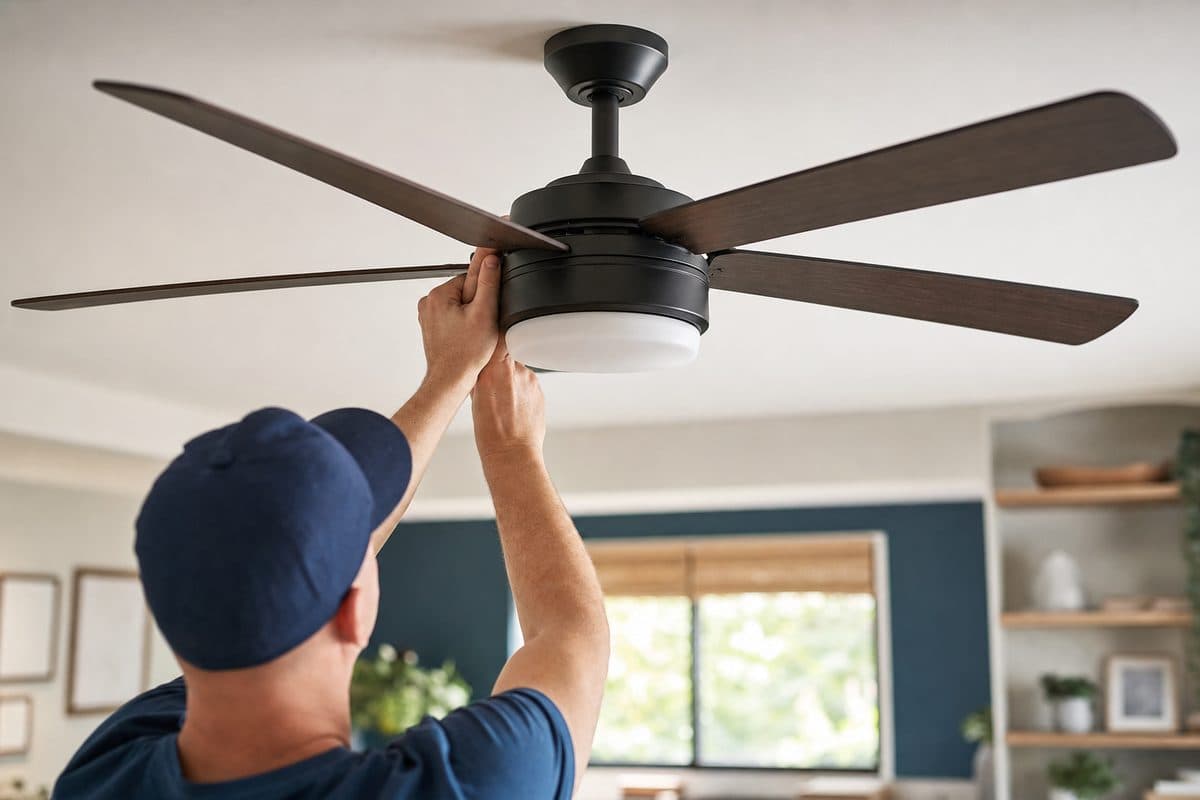
Ceiling Fan Installation: What Homeowners Should Know
Ceiling fans add comfort year-round, but installation has details that matter for safety. Here is what to know before you put one up.
Read guideNationwide coverage
Ceiling Fan Installation by state and city
Select a state or popular city to view ceiling fans guidance and check electrician availability in that area.
Get ceiling fan installation help
Call or request availability to connect with electrician help.
Call (833) 962-0486 to talk through the electrical problem and check electrician availability.