Updated February 3, 2026Sources reviewed July 31, 20266 min read
A circuit breaker that trips is not broken, it is protecting you. When a breaker senses more current than its circuit can safely carry, it switches off to prevent overheated wires and fire. The real question is not why a breaker tripped once, but why it keeps tripping. A breaker that trips repeatedly is a warning sign worth taking seriously, and forcing it back on again and again can be dangerous.
Why a breaker keeps tripping
Most repeat trips fall into one of a few categories. Knowing which one you are likely dealing with helps you describe the problem clearly when you connect with an electrician, and most trace back to one of the causes below.
- Overload: too many devices drawing power on one circuit at the same time, such as a space heater, microwave, and toaster sharing a kitchen circuit.
- Short circuit: a hot wire contacting a neutral or ground, often inside a damaged appliance cord or fixture.
- Ground fault: current escaping to ground, common in damp areas like bathrooms, garages, and outdoors.
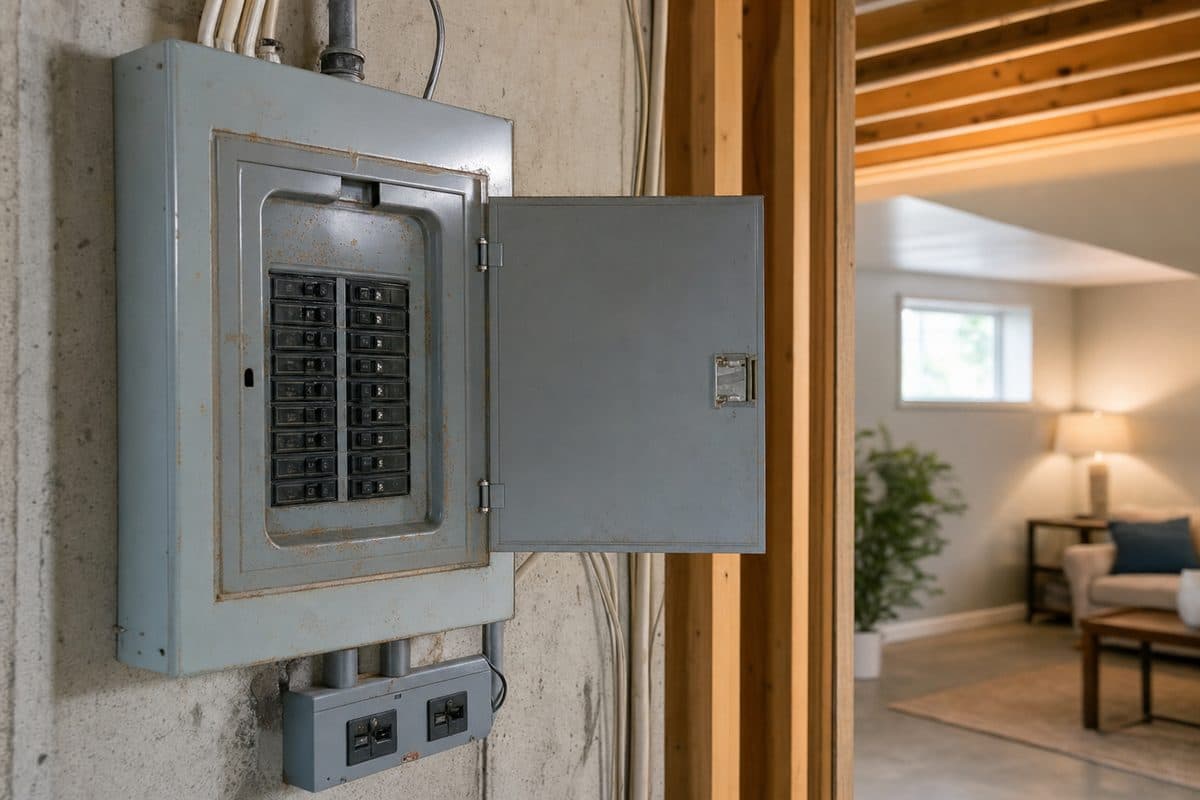
- A failing breaker or aging panel that can no longer hold a reliable connection.
- A circuit that is simply undersized for how the home is used today.
Homeowner-safe checks you can do
There are a few things you can safely observe and try without opening the panel or touching any wiring, the goal is to gather information, not to fix the circuit yourself. Work through these in order, and stop the moment anything seems off:
- 1
Notice what was running
Make a note of which appliances or devices were on when the breaker tripped. A pattern that follows one device points to that device or circuit.
- 2
Unplug and lighten the load
Unplug high-draw devices on the affected circuit, especially anything with a motor or heating element, before you reset.
- 3
Reset the breaker once
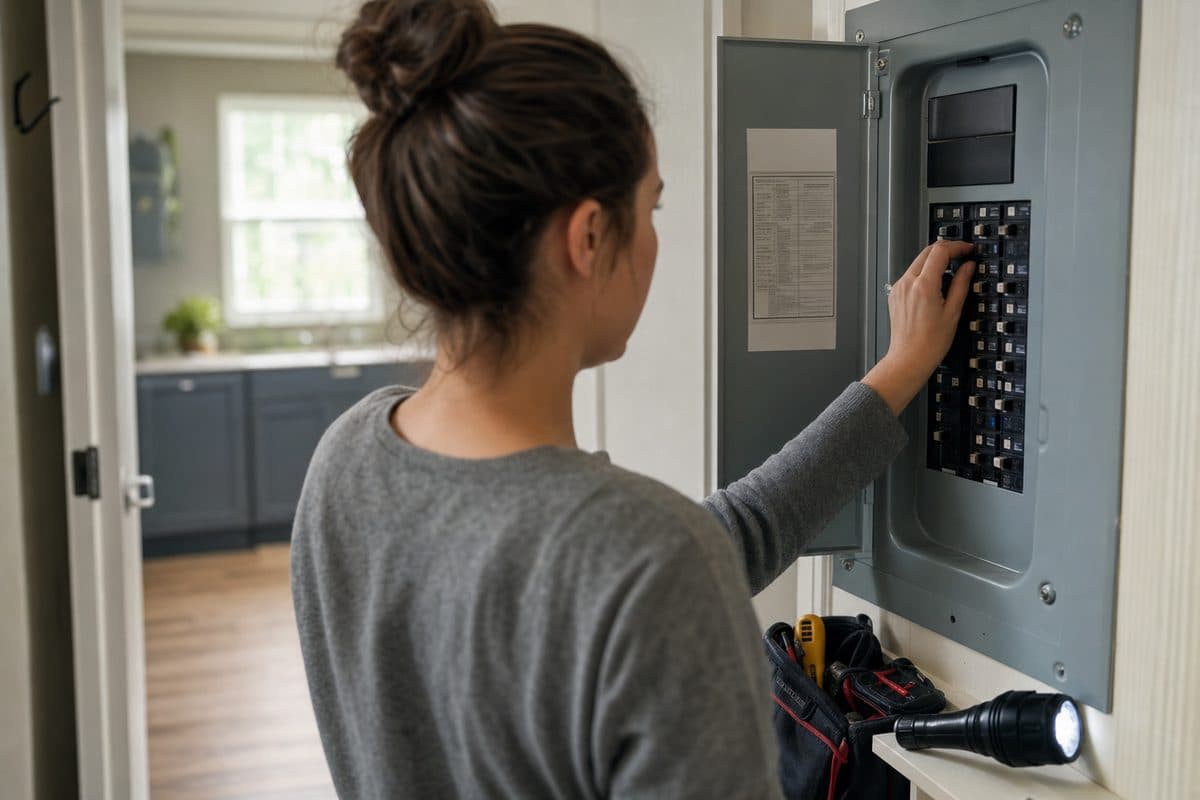
Switch the tripped breaker fully off, then back on, a single time. If it holds, watch what happens when you plug devices back in one at a time.
- 4
Stop if it trips again
If the breaker trips right back, do not keep forcing it on. Repeated resets on a faulting circuit can overheat wiring. Leave it off and connect with an electrician.
When it is time to call an electrician
A breaker that trips once during an obvious overload and then holds is usually nothing to worry about. Call for help when the trips keep coming back, when more than one circuit is involved, or when any warning sign accompanies the trip.
- The same breaker trips repeatedly even after you lighten the load.
- A breaker feels warm, looks scorched, or buzzes.
- The main breaker trips, not just a single branch circuit.
- Trips come with flickering lights, a burning smell, or warm outlets.
Before help arrives, jot down which breaker trips, what you were using, and how often it happens, that short history helps an electrician diagnose the cause faster. ElectricianQuotes is a nationwide service that helps you understand what your tripping breaker might mean and connect with electrician help in your area. Availability may vary by location and provider, and a qualified electrician will diagnose the cause and recommend a repair.
Need help with breaker repair?
Call ElectricianQuotes or check availability online for help with your electrical project.
Frequently asked questions
Is it safe to keep resetting a breaker that trips?
No. Resetting a breaker once is fine, but repeatedly forcing back a breaker that keeps tripping can overheat the wiring it protects. If a breaker will not stay on, leave it off and connect with a qualified electrician.
Why does my breaker trip only when I use a certain appliance?
That usually points to either an overloaded circuit or a fault inside that appliance or its cord. Try unplugging the device; if the breaker then holds, the appliance or the circuit serving it likely needs to be evaluated by an electrician.
Does a tripping breaker mean I need a new panel?
Not always. It can mean an overloaded circuit, a faulty device, or an aging breaker. Chronic trips across multiple circuits can be a sign a panel is undersized, but only a qualified electrician can determine whether a repair or an upgrade is the right fix.
Sources and review
Technical and safety facts in this guide were checked against the listed sources on July 31, 2026. Comparisons and next-step recommendations are editorial planning guidance; on-site findings determine the work.