Updated July 31, 2026
What the emergency ranges cover
The table describes progressively broader emergency scopes. Match the proposed work to a category before comparing prices; a low number for a narrower scope is not the same quote.
Included in the planning scope
- Burning odor, heat, or arcing diagnosis: The electrician can trace the warning sign to a device, connection, circuit, panel component, or connected equipment.
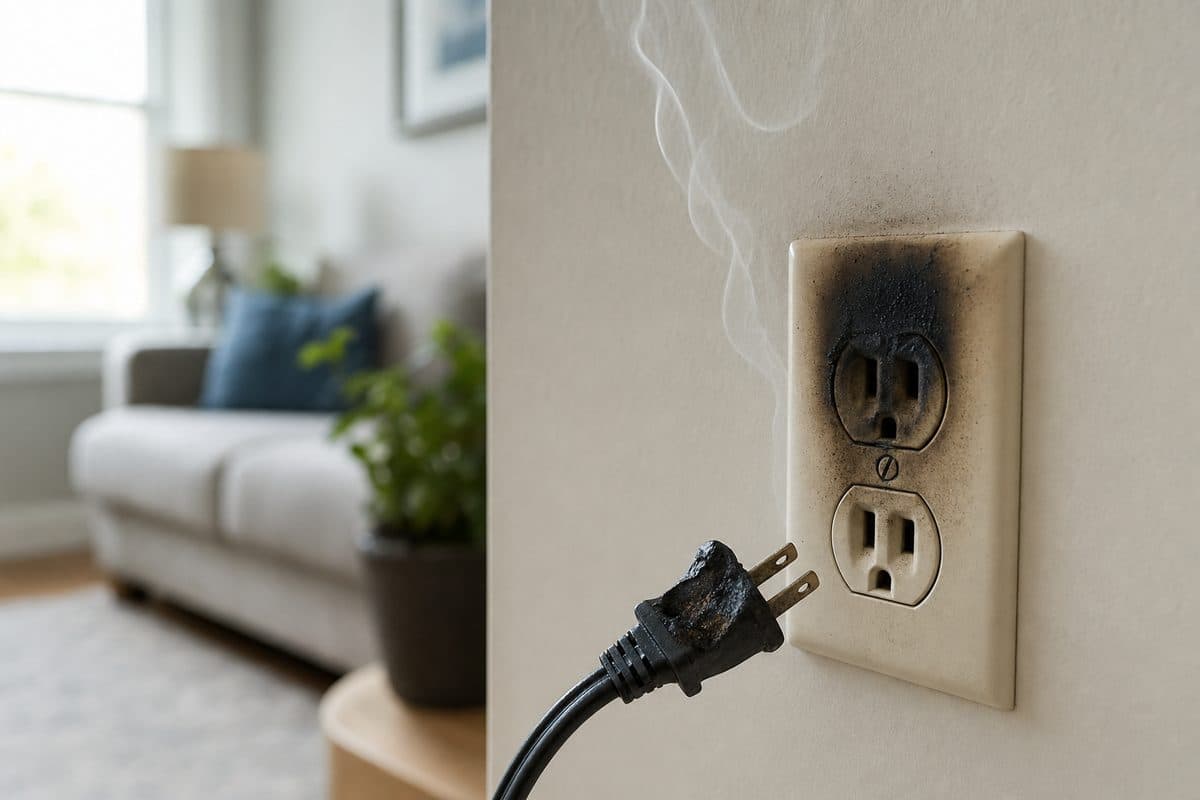
- Outlet and switch hazards: Hot, damaged, loose, buzzing, scorched, or water-exposed devices may require circuit testing and repair beyond device replacement.
- Breaker and panel problems: Repeated trips, failed resets, heat, noise, damage, or partial power loss can involve breakers, connections, bus components, or service equipment.
- Storm and service-equipment damage: Customer-owned weatherheads, masts, service conductors, disconnects, panels, and grounding may need inspection and utility coordination.
- Water-exposed electrical components: Affected devices, wiring, panels, controls, and equipment may need isolation, evaluation, repair, or replacement before reuse.
Confirm separately in writing
- Permanent repairs or system upgrades beyond the immediate electrician service scope unless separately quoted
- Drywall, paint, masonry, trenching, landscaping, or other finish restoration unless the quote names it
- Permit, inspection, engineering, utility, or equipment fees that are not itemized or expressly included
- Concealed damage or changed conditions discovered after access, unless handled through a written change order
Ask how the first visit is priced
Ask whether the first visit has a service-call, dispatch, or diagnostic fee; what diagnostic time it covers; and whether any amount is credited if you authorize the repair.
National planning ranges by scope
Compare the work included in each category before comparing the dollar range.
| Scope | Typical range | What it usually involves |
|---|---|---|
| After-hours diagnosis | $225-$625 | Urgent visit and assessment |
| Urgent repair | $500-$1,900 | Stabilizing and repairing the hazard |
| Major emergency work | $1,750-$8,250 | Panel/service issues or extensive damage |
Cost ranges are estimates developed from standardized project scopes and reviewed pricing inputs. Government labor and regional cost data are used where applicable. See our Pricing Methodology for the exact sources, calculations, and review date. Actual prices vary by property, scope, materials or equipment, location, and provider.
What can change the written quote
These items should be addressed for the actual property and proposed scope.
Parts, equipment, and selected options
The quote should identify the devices, equipment, wire, breakers, controls, and allowances it includes. For this service, time of day and how urgent the response is can change both material and installation scope.
Access, testing, and labor
Diagnostic time, circuit routing, working clearance, height, occupied-space protection, and difficult access can add labor. severity and source of the hazard should be described before competing totals are compared.
Permits and inspections
Requirements depend on the project address and scope. Ask who determines whether a permit or inspection applies, who obtains it, and whether the related fee and correction work are included.
Utility or third-party coordination
Most projects stay entirely on customer-owned equipment, but work involving service equipment, interconnection, shutdowns, or metering may add utility steps. The proposal should state whether parts and repairs required after stabilization creates any coordination dependency.
Opening and restoring finished surfaces
Drywall access, patching, paint, masonry, trenching, landscaping, cleanup, and disposal should be listed as included, excluded, or assigned to another trade.
Timing and urgency
After-hours response and immediate stabilization can be priced differently from a scheduled permanent repair. Ask which portion of the visit the quote covers.
How to use these planning ranges
The dollar figures are reviewed ElectricianQuotes editorial planning ranges for residential emergency in the United States. They organize the three existing service tiers and add a project-specific major category rather than inventing a ceiling for broad or combined work.
Independent analyses are used in the derivation and review process rather than presented as third-party citations. Government and recognized safety sources support technical scope, equipment, safety, and labor-market context.
A reliable comparison starts with the same requested result, site information, equipment assumptions, exclusions, permit and inspection responsibility, restoration scope, and change-order process. Is the condition an immediate life-safety hazard, a utility issue, or an urgent electrician service call?
Compare written quotes on the same terms
A useful comparison covers scope, assumptions, exclusions, and change handling as well as the total.
- The exact emergency electrician scope, including what is being installed, repaired, removed, or reused
- Labor, equipment, devices, wire, breakers, mounting hardware, and other materials listed separately when practical
- How the quote accounts for time of day and how urgent the response is, severity and source of the hazard, and parts and repairs required after stabilization
- Who is responsible for permits, utility coordination, and required inspections
- Whether drywall access, trenching, patching, painting, cleanup, or disposal is included
- Equipment model numbers, warranty terms, payment schedule, and quote expiration date
- How concealed conditions or requested changes will be documented and approved before extra work begins
Emergency cost questions
How much should I budget for emergency electrician?
Emergency and after-hours work is typically priced differently from scheduled visits because of the urgency and timing. The table on this page separates after-hours diagnosis, urgent repair, and major emergency work to support comparison with the scope closest to the project. Treat the figures as national planning ranges. A written quote based on the home, equipment, access, and local requirements is the reliable project price.
What changes a emergency quote the most?
The biggest variables are usually time of day and how urgent the response is, severity and source of the hazard, parts and repairs required after stabilization, and whether the panel or service wiring is involved. Two projects that sound similar can require different labor, materials, access work, or electrical capacity. Give each electrician the same project details and ask them to identify assumptions so the quotes are easier to compare.
What should a written emergency quote include?
Look for a defined scope, labor and material allowances, equipment or device specifications, permit and inspection responsibility, excluded finish work, warranty terms, payment timing, and a process for approving changes. The lowest total is difficult to compare if important work is only described verbally or left as an open allowance.
Can the final emergency cost change after work starts?
It can if concealed damage, inaccessible wiring, insufficient panel capacity, utility requirements, or a requested scope change appears after the initial assessment. Ask how change orders are handled. Additional work should be explained and priced in writing before it proceeds whenever the situation allows.
Sources and editorial review
Government and recognized safety sources support the technical scope, equipment, safety, and labor-market context in this guide. Official source records are attributed below; independent pricing analyses remain internal derivation and review inputs.