Updated July 31, 2026
Planning smoke & co detectors cost in Texas
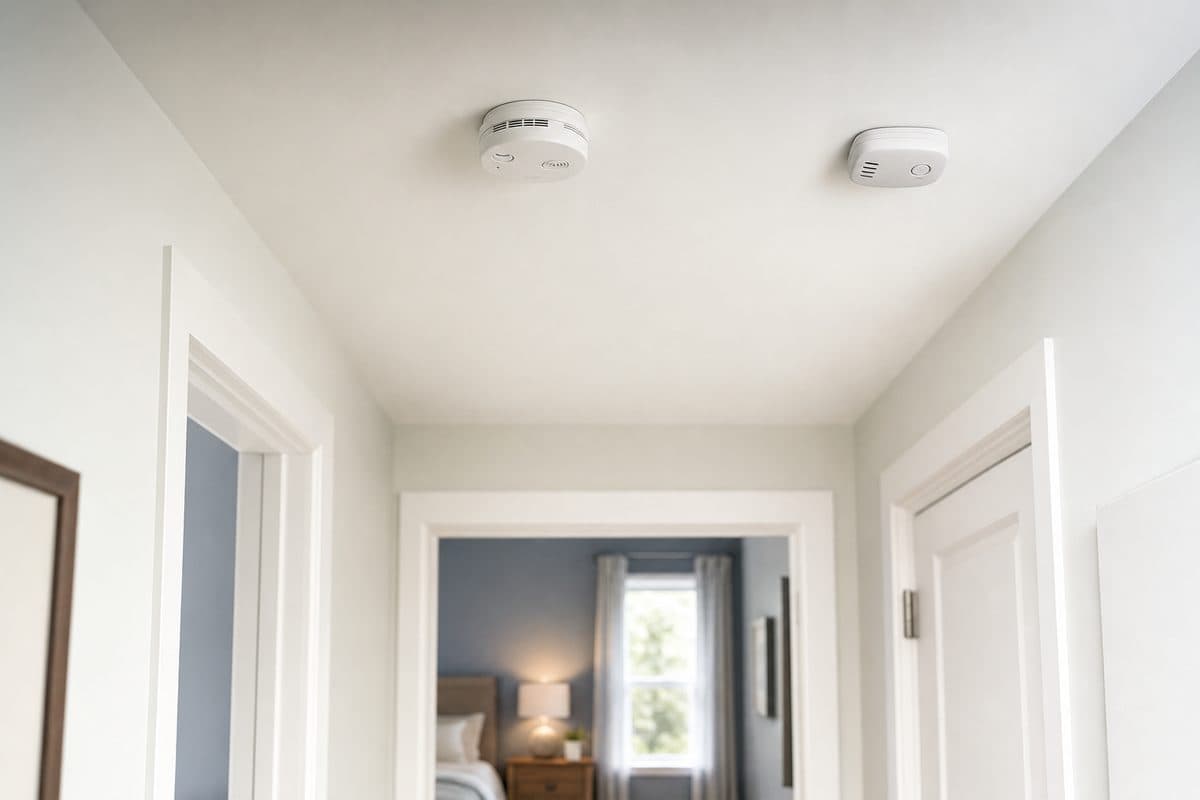
Start the smoke & carbon monoxide detector installation cost discussion in Texas by defining the requested result, such as if your current detectors are over 10 years old. The planning table uses the currently active pricing release and applies approved regional labor and goods inputs when that release includes them. The written proposal still needs to match the actual equipment, access, and findings.
For this request, compare how each proposal handles wiring requirements: battery vs. hardwired, number of units needed, and the choice between inspection or project corrections and chirping and nuisance-alarm diagnosis. Those scope details matter in addition to the versioned regional market adjustment shown in the planning ranges.
For Texas, add a written comparison line for "Local code compliance needs" and the project option "Hardwired alarm replacement". That line should show what is included now, what depends on evaluation, and what would require a documented change to the proposed total.
Use Texas as the location identity for this cost plan. Nearby supported routes such as Houston, San Antonio, Dallas are navigation alternatives, not sources for borrowing another market's requirements or prices. Ask the provider to identify the address-specific authority, utility, access limits, and restoration assumptions in writing.
A useful final check for Texas is "How will existing alarms, bases, wiring, model compatibility, and system faults be handled?". Match the answer to the expected step "Installation" so the scope, deliverable, and price can be compared together.
No finer official market series covers Texas, so the current release applies the approved statewide Texas basis. These are state-adjusted planning figures rather than a measured Texas average, and an individual quote can fall outside them. In the calculation, the electrical-trade labor component uses an index of 0.829, while nonlabor goods use 0.985; 1.000 is the national benchmark. These inputs are versioned under electrician-location-inputs-bls-2025-bea-2024-v1 and valid through 2026-12-10. They adjust only the documented labor and goods shares, not permit fees, utility charges, product quantities, contractor overhead choices, or property conditions.
Keep one Texas quote summary with every proposal: repeat the Texas service address, the requested result "I need smoke or CO detectors", and the cost input "Type of detectors: smoke, CO, or combination". Using the same smoke & carbon monoxide detector installation summary for each provider makes differences in evaluation, included work, exclusions, and change approval easier to compare. If the actual address is in Houston, San Antonio, Dallas, use that supported location guide before comparing quotes. Record any state-level scope or cost input under Texas with its source instead of treating it as a regional price adjustment.
Smoke & CO Detectors planning ranges for Texas
Compare the documented scope behind each range before comparing totals.
| Scope | Typical range | What it usually involves |
|---|---|---|
| Basic Installation | $150-$400 | Installation of battery-operated detectors. |
| Standard Installation | $400-$1,300 | Installation of hardwired detectors with battery backup. |
| Comprehensive Installation | $700-$1,300 | Eight contractor-supplied hardwired combination smoke/CO alarms replacing existing devices on accessible 120V interconnect wiring; testing is included, while new circuits, rewiring, finish repair, monitoring, and permit fees are excluded. |
Cost ranges are estimates developed from standardized project scopes and reviewed pricing inputs. Government labor and regional cost data are used where applicable. See our Pricing Methodology for the exact sources, calculations, and review date. Actual prices vary by property, scope, materials or equipment, location, and provider.
Texas quote inputs to verify
The cited local and state statements below are limited to current source-backed records. They may affect process or scope, but they do not establish a customer price.
Code Adoption
The TDLR compliance guide identifies the 2023 National Electrical Code as the Texas minimum code effective September 1, 2023.
Permits Inspections
Texas municipalities may administer electrical permits, inspections, and local amendments within their authority.
Match the scope before the price
Which national planning category best matches smoke and carbon monoxide alarm planning for this Texas project?
The proposal should explain how local code compliance needs changes the category and what additional work would require written approval.
Confirm permits and inspections for the address
Which authority, if any, handles permits or inspections for this exact Texas address and smoke & carbon monoxide detector installation scope?
Ask who verifies the requirement, obtains approvals, pays listed fees, schedules inspections, and handles corrections. Do not assume another city's process applies.
Separate access from restoration
What access, protection, opening, routing, cleanup, and finish restoration does the Texas quote include?
Which smoke, carbon monoxide, or combination alarm models and quantities are included? should make clear whether drywall, paint, masonry, trenching, landscaping, disposal, or another trade is outside the electrical total.
Identify utility and project boundaries
Does the work stay on customer-owned equipment, or does the serving utility or another party need to coordinate a shutdown, meter, service, application, or inspection?
Many smoke & carbon monoxide detector installation projects need no utility action. When coordination does apply, the proposal should name the dependency without promising the utility's timing or approval.
Compare Texas quotes on the same terms
Give each provider the same starting information, then compare the written scope and assumptions along with the total.
- Who is responsible for permits, utility coordination, and required inspections
- Whether drywall access, trenching, patching, painting, cleanup, or disposal is included
- Equipment model numbers, warranty terms, payment schedule, and quote expiration date
- How concealed conditions or requested changes will be documented and approved before extra work begins
- The exact smoke & carbon monoxide detector installation scope, including what is being installed, repaired, removed, or reused
- Labor, equipment, devices, wire, breakers, mounting hardware, and other materials listed separately when practical
- How the quote accounts for type of detectors: smoke, co, or combination, wiring requirements: battery vs. hardwired, and number of units needed
How to use these planning ranges
The dollar figures are reviewed ElectricianQuotes editorial planning ranges for residential smoke & co detectors in the United States. They organize the three existing service tiers and add a project-specific major category rather than inventing a ceiling for broad or combined work.
Independent analyses are used in the derivation and review process rather than presented as third-party citations. Government and recognized safety sources support technical scope, equipment, safety, and labor-market context.
A reliable comparison starts with the same requested result, site information, equipment assumptions, exclusions, permit and inspection responsibility, restoration scope, and change-order process. Which alarm types, power method, interconnection, and placement plan fit the property?
Smoke & CO Detectors cost in Texas: common questions
Are the smoke & carbon monoxide detector installation prices on this Texas page local averages?
No. The categories begin with the reviewed national scopes and apply the approved geographic labor and goods inputs identified in the planning section above, which may be metropolitan, nonmetropolitan, or statewide for this address. They are planning ranges, not a survey of completed Texas jobs or a property-specific quote.
What should I confirm in a smoke & carbon monoxide detector installation quote for Texas?
Confirm what type of detectors are needed: smoke, CO, or combination, how the proposal handles type of detectors: smoke, CO, or combination, and whether permits, inspections, utility coordination, access, restoration, cleanup, and change orders are included or excluded. Give each provider the same starting details.
Which scope category should I use for smoke & carbon monoxide detector installation in Texas?
Use the category that matches the written work, not the category with the lowest number. Start by deciding whether the project is closest to interconnected and smart alarm systems. If evaluation reveals broader work, ask for the category and total to be updated in writing.
Is there a verified local cost rule for smoke & carbon monoxide detector installation in Texas?
The TDLR compliance guide identifies the 2023 National Electrical Code as the Texas minimum code effective September 1, 2023. The cited official source supports that limited local input, not a complete customer price. Confirm how it applies to the address and proposed scope.
Sources and editorial review
Official BLS electrical-trade labor data supports the labor localization input, and official BEA regional goods-price data supports the approved nonlabor adjustment. Government and recognized safety sources support the limited factual context shown for Texas.
- Electricians: Occupational Outlook HandbookU.S. Bureau of Labor Statistics
- Smoke AlarmsU.S. Fire Administration
- Carbon Monoxide AlarmsU.S. Consumer Product Safety Commission
- May 2025 Occupational Employment and Wage StatisticsU.S. Bureau of Labor Statistics
- Regional Price Parities by State and Metro AreaU.S. Bureau of Economic Analysis
- Electricians Compliance GuideTexas Department of Licensing and Regulation