Updated July 25, 2026Sources reviewed July 31, 20268 min read
Smoke and carbon monoxide alarms protect against different hazards, so planning coverage starts with understanding where each type generally belongs, how it is powered, and when it is due for replacement. If an alarm is chirping, giving an end-of-life signal, or you are unsure whether your home has adequate coverage, stop relying on that device alone and arrange a qualified electrician evaluation for hardwired systems, while following the manufacturer instructions and local requirements.
What smoke alarms and CO alarms are meant to cover
Smoke alarms are intended to alert occupants to fire-related smoke, while carbon monoxide alarms are intended to warn about carbon monoxide, a dangerous gas that cannot be seen or smelled. They are not interchangeable unless the product is specifically designed as a combination unit, so replacement planning should start with identifying which type you already have and whether each area of the home is covered appropriately.
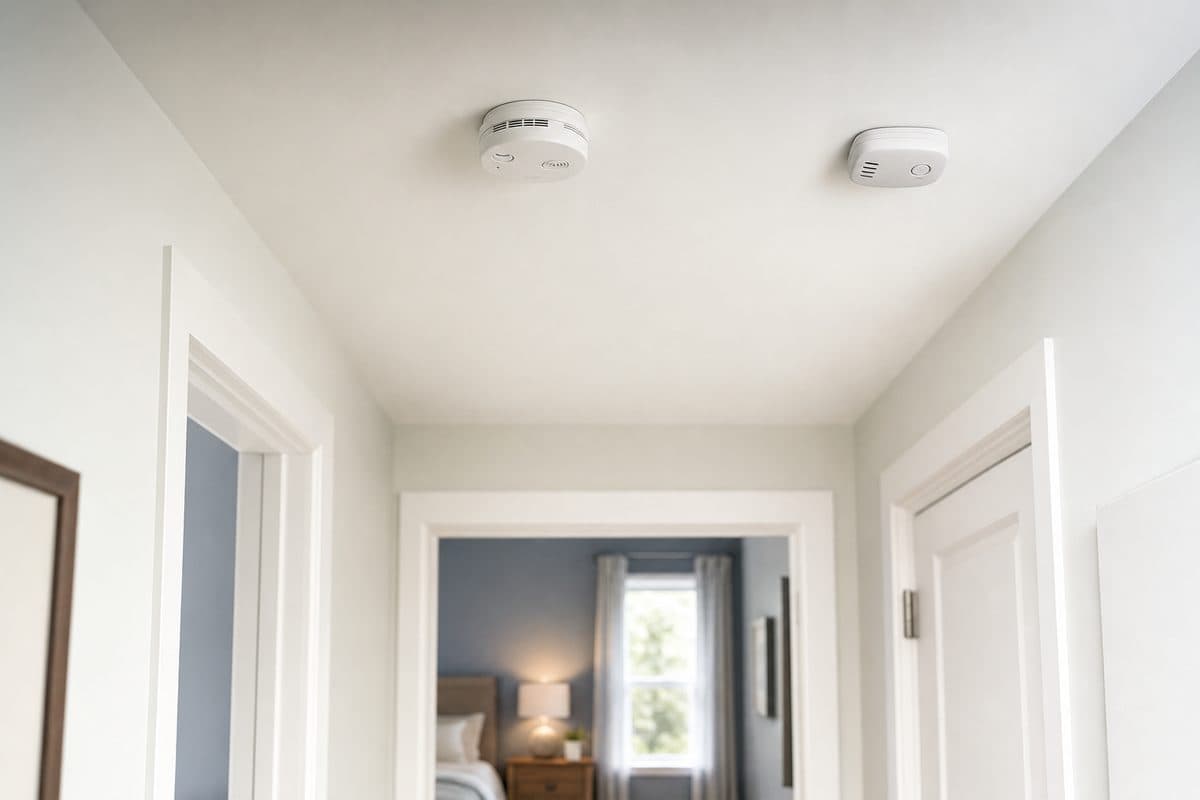
- Smoke alarms are generally recommended inside and outside sleeping areas and on every level of the home.
- CO alarms are generally recommended on each level and outside sleeping areas.
- Combination alarms may simplify coverage, but placement and replacement still need to follow the manufacturer instructions and local requirements.
High-level placement guidance for each alarm type
Placement is one of the most important differences between smoke and carbon monoxide protection. A useful planning approach is to map your sleeping areas, each floor level, and any current alarm locations, then compare that layout against the manufacturer guidance for your specific devices and any local requirements, since rules can vary by city, county, and state.
Power choices, hardwired options, and interconnection
Homeowners often choose between battery-powered alarms and hardwired alarms with battery backup. Hardwired alarms are commonly considered when upgrading older homes, replacing aging connected devices, or trying to create interconnected alerts so that when one alarm activates, others sound as well. That broader notification can be especially helpful in larger homes or homes with sleeping areas separated from living spaces.
- Battery-powered alarms may be simpler for basic replacement planning.
- Hardwired alarms with battery backup can keep protection active during a power outage, depending on the product design and battery condition.
- Interconnected alarms can improve whole-home awareness, but compatibility and wiring setup should be evaluated by a qualified electrician for hardwired systems.
Testing, chirping, and end-of-life planning
A good alarm plan includes regular testing and a schedule for replacement before protection becomes uncertain. USFA advises testing smoke alarms monthly and says they should generally be replaced when they are 10 years old. For carbon monoxide alarms, consumers should follow the manufacturer for testing guidance and end-of-life replacement timing, since that information can vary by device.
- Test smoke alarms monthly.
- Check the label or date information on each alarm if it is safely visible.
- If an alarm is chirping or signaling end of life, do not ignore it. Arrange replacement planning promptly, especially for hardwired systems.
- Keep a simple record of alarm locations, install dates if known, and any recent nuisance alerts or battery warnings.
When to request electrician help for hardwired alarms
If your home has hardwired alarms, mixed old and new devices, frequent nuisance problems, or uncertain interconnection, an electrician can assess the system before replacement. This is also helpful when you are remodeling, changing room use, adding sleeping areas, or trying to improve alarm coverage without guessing which devices or connections are suitable.
What an electrician evaluates during alarm replacement planning
When adding or replacing hardwired smoke or carbon monoxide alarms, an electrician typically evaluates the existing wiring method, whether alarms are already interconnected, the age and condition of the installed devices, and whether the planned coverage aligns with the manufacturer instructions and local requirements. They may also review panel labeling, circuit assignment, ceiling or wall box locations, accessibility, and whether replacement is straightforward or likely to require broader updates.
- Whether the current alarms are hardwired, battery-powered, or a mix.
- Whether there is an existing interconnect between alarms.
- The visible age and condition of the devices.
- Whether battery backup is present on hardwired units.
- Whether current locations appear to support the intended smoke and CO coverage plan.
What to gather before asking for quotes
A more useful quote starts with clear information from the homeowner. Gather photos of existing alarms, note whether they are hardwired or battery-powered if known, count the number of floors and sleeping areas, and list any chirping, false alarms, or missing coverage concerns. If you are interested in smart-home features, mention that early so providers can explain whether your goals involve standard alarms, connected alerts, or broader smart-home integration.
- Number of existing alarms and where they are located.
- Whether any alarm is a smoke alarm, CO alarm, or combination unit.
- Approximate age of the devices, if known.
- Whether the home already has hardwired alarms or interconnection.
- Any remodeling, room conversions, or added sleeping areas that may affect planning.
Your next decision is usually whether you need simple replacement, a broader hardwired upgrade, or an inspection to confirm coverage and device age. If you are unsure, requesting an evaluation focused on placement, power type, interconnection, and replacement timing can help you compare options and get quotes that clearly describe the proposed alarm types, the areas to be covered, and any limitations based on the existing system.
Need help with smoke & carbon monoxide detector installation?
Call ElectricianQuotes or check availability online for help with your electrical project.
Frequently asked questions
Where should smoke alarms generally be placed in a home?
USFA says smoke alarms generally belong inside and outside sleeping areas and on every level of the home. Final placement should follow the manufacturer instructions and any local requirements, which can vary by city, county, and state.
Where should carbon monoxide alarms generally be placed?
CPSC says CO alarms should generally be installed on each level of the home and outside sleeping areas. Consumers should also follow the alarm manufacturer for placement details and end-of-life replacement guidance.
How often should smoke alarms be tested and replaced?
USFA advises testing smoke alarms monthly and says they should generally be replaced when they are 10 years old. If a device is chirping, signaling end of life, or its age is unclear, it is wise to plan replacement promptly.
What should be included in a quote for hardwired alarm work?
A useful quote should identify whether the work is for smoke alarms, CO alarms, or combination units, whether alarms will be hardwired and interconnected, how many devices are included, the areas intended for coverage, and any known limits related to the existing wiring or system condition. ElectricianQuotes can help connect homeowners with providers, but availability and project scope can vary by location and provider.
Sources and review
Technical and safety facts in this guide were checked against the listed sources on July 31, 2026. Cost and timing language is planning context, not a property-specific quote. Local code, permit, inspection, utility, and product requirements should be confirmed for the project address and equipment. Comparisons and next-step recommendations are editorial planning guidance; on-site findings determine the work.