Iowa City, IA Smoke & CO Detectors
Smoke & Carbon Monoxide Detector Installation in Iowa City, IA
Smoke and carbon monoxide alarm projects should begin with the property layout, existing alarms, power and interconnection, selected devices, and the requirements that apply to the actual location and project. In Iowa City, start with the affected equipment or project goal so the request can be matched to the right electrical scope without assuming a diagnosis.
- Electrician help around Iowa City
- Help for repairs and electrical projects
- Call or check availability online
Updated July 26, 2026
Understanding smoke & carbon monoxide detector installation in Iowa City
Smoke and carbon monoxide alarm projects should begin with the property layout, existing alarms, power and interconnection, selected devices, and the requirements that apply to the actual location and project. A useful first description for a Iowa City, IA request is i need smoke or CO detectors; an electrician can then evaluate the condition, access, and appropriate scope.
Local requirements in Iowa City, IA depend on the project address and work. Confirm the responsible authority, serving utility, equipment details, access, and proposal assumptions instead of applying a rule or diagnosis from another location.
Start with the existing alarm layout and project requirement
Share the floor plan, sleeping areas, levels, attached garage or fuel-burning equipment when relevant, existing alarm locations, power type, interconnection, and any written inspection or project requirement.
What is happening
Existing hardwired alarms will be replacedFirst call or action
Call ElectricianQuotes to review device type, power, interconnection, and compatibility(833) 962-0486Why
The electrician can verify the existing bases, wiring, circuit, interconnection, device listing, model compatibility, and replacement scope.
What is happening
New or additional alarm locations are planned
First call or action
Call ElectricianQuotes to verify placement and wiring requirements(833) 962-0486Why
The property layout, adopted requirements, manufacturer instructions, power source, interconnection, access, and finish work should be reviewed together.
What is happening
A remodel, addition, sale, or inspection creates an alarm requirement
First call or action
Call ElectricianQuotes with the project or inspection documents(833) 962-0486Why
The electrician can tie the alarm scope to the actual jurisdiction, permit, inspection, and property conditions instead of assuming a universal rule.
What is happening
Smoke and carbon monoxide functions will be combined or interconnected
First call or action
Call ElectricianQuotes to plan compatible alarms and interconnection(833) 962-0486Why
Alarm type, sensing purpose, power, interconnection method, model compatibility, network features, and placement requirements should be coordinated.
First call or action
Call ElectricianQuotes for alarm and circuit diagnosis(833) 962-0486Why
The cause may involve battery or end-of-life indication, contamination, device failure, power, interconnection, placement, or another alarm in the system.
What is happening
Alarm wiring, a device, or the electrical box is hot, sparking, scorched, or smells burnedFirst call or action
Keep clear and call ElectricianQuotes(833) 962-0486Why
The device and connected electrical circuit need prompt evaluation before another alarm is installed.
What is happening
An alarm is sounding and there may be smoke, fire, or carbon monoxide exposure
First call or action
Leave the area and contact emergency servicesWhy
Treat a possible active hazard as an emergency rather than an installation or troubleshooting visit.
What smoke and carbon monoxide alarm installation can include
The quote should identify verified placement requirements, alarm types and models, power and interconnection, circuit and box work, access, setup, testing, documentation, and finish responsibilities.
Hardwired alarm replacement
Removal, base and wiring inspection, model compatibility, battery backup, interconnection, mounting, date labeling, testing, and disposal may be included.
View related guidanceNew hardwired alarm locations
New boxes, cable routes, circuit source, interconnection, ceiling or wall access, placement verification, permits, and finish restoration may be required.
View related guidanceSmoke and carbon monoxide alarm planning
Alarm purpose, device type, location, power, interconnection, manufacturer instructions, and adopted local requirements should be documented.
Interconnected and smart alarm systems
Wired or wireless interconnection, model compatibility, hubs or apps, network needs, notifications, user setup, and manual testing should be defined.
View related guidanceInspection or project corrections
A written correction should identify the required alarm locations or functions, governing project, proposed devices, and closure documentation.
View related guidanceChirping and nuisance-alarm diagnosis
Device age, batteries, contamination, placement, power, interconnection, model status, and other alarms may be reviewed before replacement.
View related guidanceIowa City service planning
No unsourced city rule is assumed here. Use the planning questions below to identify the authority, utility, access, and project details that apply to the address.
A useful starting scenario in Iowa City
For Iowa City, Iowa, begin with a consistent account of the symptom, goal, timing, and affected equipment so each proposal starts from the same request. Use this as the initial scenario: After a home renovation or remodel. Then ask what evidence would change the proposed scope.
Use "Inspection or project corrections" as a decision point and ask what evaluation is needed before that option is confirmed. Before the appointment, use this non-invasive observation: Existing alarm locations, visible model and date labels, power type, and whether alarms sound together. Do not remove covers or open equipment.
The planning sequence can include "Testing: Ensure all detectors are functioning correctly and interconnected if required" and end with a written boundary between included work and later decisions. Treat Iowa City, Iowa as the location identity for the request, while Cedar Rapids, Davenport, Waterloo provide alternative service links only for properties actually in those areas.
A useful quote answers this question: How will existing alarms, bases, wiring, model compatibility, and system faults be handled? It should also state how this project expectation will be handled: Electricians will install, replace, or hardwire detectors as needed. This keeps the Iowa City request focused on a useful customer decision instead of unsupported local assumptions.
Before the Iowa City appointment, add this project detail to the request: When local regulations require upgrades. Then ask how this factor could change the written scope: Wired or wireless interconnection, model compatibility, hubs or apps, network needs, notifications, user setup, and manual testing should be defined.
The proposal record for Iowa City, Iowa should distinguish "Chirping and nuisance-alarm diagnosis" from the first scope option. It should also describe the checkpoint "Final Walkthrough" and answer: Are ceiling or wall access, patching, painting, permits, inspection, disposal, and cleanup included?
Add a final Iowa City, Iowa record for the need "I need smoke or CO detectors" and the scope input "A written correction should identify the required alarm locations or functions, governing project, proposed devices, and closure documentation". Compare each provider's answer to "How will every alarm, interconnection path, notification, and manual test be verified?" before authorizing work beyond the written proposal.
Use one Iowa City, Iowa request summary for every provider: identify the Iowa City, Iowa service address, the requested result "When installing new smoke or carbon monoxide detectors", and the scope factor "Device age, batteries, contamination, placement, power, interconnection, model status, and other alarms may be reviewed before replacement". Keeping that same smoke & carbon monoxide detector installation summary with each proposal makes differences in evaluation, included work, exclusions, and change approval easier to see. If the actual property belongs in Cedar Rapids, Davenport, Waterloo, use that supported city guide before requesting the quote.
Questions to confirm for the address
- Which service-specific state facts and nearby location links help plan the next step?
- What equipment specifications, access limits, circuit route, and finish restoration should the Iowa City proposal identify?
- Is the project actually in Iowa City, or should its local planning be checked on the supported Cedar Rapids or Davenport service page?
- Which authority handles permits and inspections for this smoke & carbon monoxide detector installation scope at the Iowa City project address?
- Which utility serves the address, and does the work involve customer-owned equipment, utility-owned equipment, or both?
- Which authority handles permits and inspections for the project address in Iowa City?
Iowa context to confirm
Use these questions to confirm current state responsibilities without turning a general planning point into an unsupported requirement.
- Which state-level requirements apply to smoke & carbon monoxide detector installation at this address in Iowa?
- Which licensing or credential authority applies to the work in Iowa?
- Which authority handles permits and inspections for the project address?
- Which utility delivers power to the property, and where is its equipment-ownership boundary?
- What site access, existing equipment, and restoration work can affect the project scope?
Common issues connected to smoke & carbon monoxide detector installation
Choose the symptom that most closely matches what you are seeing. Each guide explains useful observations and the service that may fit.


Budgeting for smoke & carbon monoxide detector installation in Iowa City
The table is a national planning reference, not a city-specific quote. The final price depends on diagnosis, access, materials, permits, and the work required.
The cost of installing smoke and carbon monoxide detectors varies based on several factors.
Type of detectors: smoke, CO, or combination
Wiring requirements: battery vs. hardwired
Number of units needed
Local code compliance needs
| Scope | Typical range | What it usually involves |
|---|---|---|
| Basic Installation | $150-$400 | Installation of battery-operated detectors. |
| Standard Installation | $400-$1,275 | Installation of hardwired detectors with battery backup. |
| Comprehensive Installation | $675-$1,275 | Eight contractor-supplied hardwired combination smoke/CO alarms replacing existing devices on accessible 120V interconnect wiring; testing is included, while new circuits, rewiring, finish repair, monitoring, and permit fees are excluded. |
Cost ranges are estimates developed from standardized project scopes and reviewed pricing inputs. Government labor and regional cost data are used where applicable. See our Pricing Methodology for the exact sources, calculations, and review date. Actual prices vary by property, scope, materials or equipment, location, and provider.
How an alarm installation project should proceed
The installer should verify the property and project requirements, then define compatible devices, placement, power, interconnection, access, testing, and records.
- 1
Review property and project requirements
Collect the floor plan, existing alarms, remodel or inspection documents, jurisdiction, manufacturer instructions, and desired features.
- 2
Inspect the existing alarm system
Identify alarm types, models and dates, locations, power, circuit, interconnection, boxes, visible condition, and system behavior.
- 3
Verify placement and device plan
Match alarm functions and locations to verified requirements and manufacturer instructions, then select compatible devices and interconnection.
- 4
Define wiring and access
Plan boxes, cable routes, circuit work, ceiling or wall access, wireless components, permits, inspection, and finish restoration.
- 5
Install and label
Complete devices, bases, wiring or wireless interconnection, batteries, app or hub setup, date labels, cleanup, and required documentation.
- 6
Test and hand off
Test every alarm and interconnection path, verify notifications and manual controls, review user testing and replacement information, and document the installed models.
Before you hire: what to ask
Compare alarm-system quotes by verified placement, device type and model, power and interconnection, wiring and access, smart setup, testing, and documentation.
- What property, project, manufacturer, and local requirements support the proposed layout?
- Which smoke, carbon monoxide, or combination alarm models and quantities are included?
- Which alarms are hardwired, battery powered, wired-interconnected, or wirelessly interconnected?
- Are new boxes, wiring, circuits, interconnection, batteries, hubs, and app setup included?
- How will existing alarms, bases, wiring, model compatibility, and system faults be handled?
- Are ceiling or wall access, patching, painting, permits, inspection, disposal, and cleanup included?
- How will every alarm, interconnection path, notification, and manual test be verified?
- What documentation, date labels, model records, instructions, and warranty will be provided?
- What type of detectors are needed: smoke, CO, or combination?
- Do you need battery-operated or hardwired detectors?
- Are there specific local code requirements?
- Is interconnection required across multiple detectors?
Get connected with smoke and carbon monoxide alarm installation help in Iowa City
Call ElectricianQuotes or check availability online for help with your electrical project.
Common questions about smoke & carbon monoxide detector installation in Iowa City
How should I start a smoke & carbon monoxide detector installation request in Iowa City?
Start with the main decision: Which alarm types, power method, interconnection, and placement plan fit the property? Describe the affected equipment or project goal, when the issue began, and any visible change. Do not open, remove, or handle electrical equipment to gather more detail.
What local detail should I confirm for smoke & carbon monoxide detector installation in Iowa City?
Which service-specific state facts and nearby location links help plan the next step? Requirements can depend on the exact address and work, so the proposal should identify the authority or utility being relied on instead of assuming one rule covers every Iowa City project.
What should a Iowa City smoke & carbon monoxide detector installation quote explain?
Ask the proposal to define the work, assumptions, materials, and access. It should also answer this comparison question: Do you need battery-operated or hardwired detectors? Compare the described scope as well as the price so differences between proposals are visible.
How does the Iowa location affect this project?
State and local responsibilities can vary by scope and address. Confirm the current credential, permit, inspection, and utility questions that apply before work begins rather than relying on a rule from another market.
Sources and editorial review
Updated July 26, 2026. Service guidance is checked against the safety and consumer sources below. When this page makes a city-specific statement about permits, inspections, or utility service, the supporting local source is included here.
Nearby cities
Browse smoke & carbon monoxide detector installation information for nearby covered communities.
View smoke & co detectors across IowaOther services in Iowa City


Helpful resources
Helpful smoke & carbon monoxide detector installation guides
Learn about common issues, costs, and what to expect before requesting service.
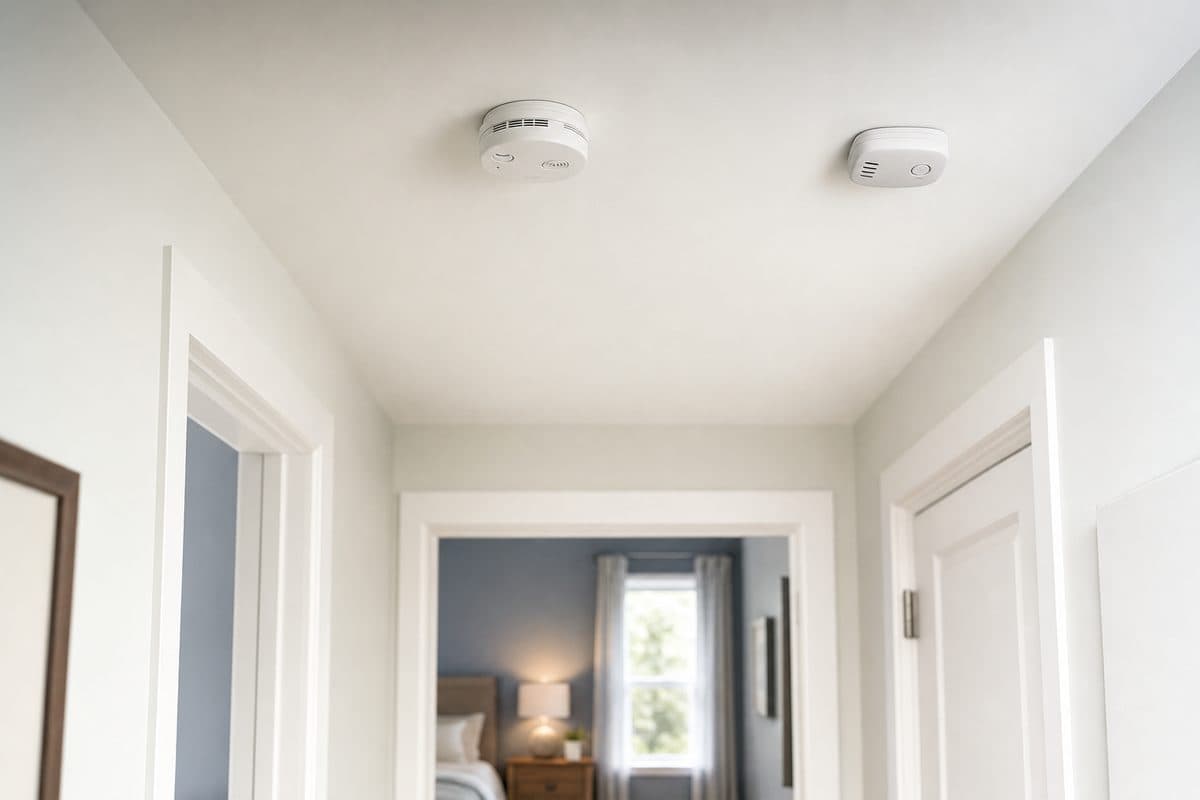
Need smoke and carbon monoxide alarm installation help in Iowa City?
Call ElectricianQuotes to connect with help for repairs, panels, breakers, outlets, switches, lighting, EV chargers, inspections, wiring, and more.
Call (833) 962-0486 to talk through the electrical problem and check electrician availability.