Updated July 25, 2026Sources reviewed July 31, 20268 min read
Before choosing a video doorbell or other smart home device, focus on planning rather than product hype. The main questions are whether your home's existing power and wiring are compatible, whether your network and device ecosystem fit your goals, and what an electrician should evaluate before any installation work is quoted.
Start with device goals and locations
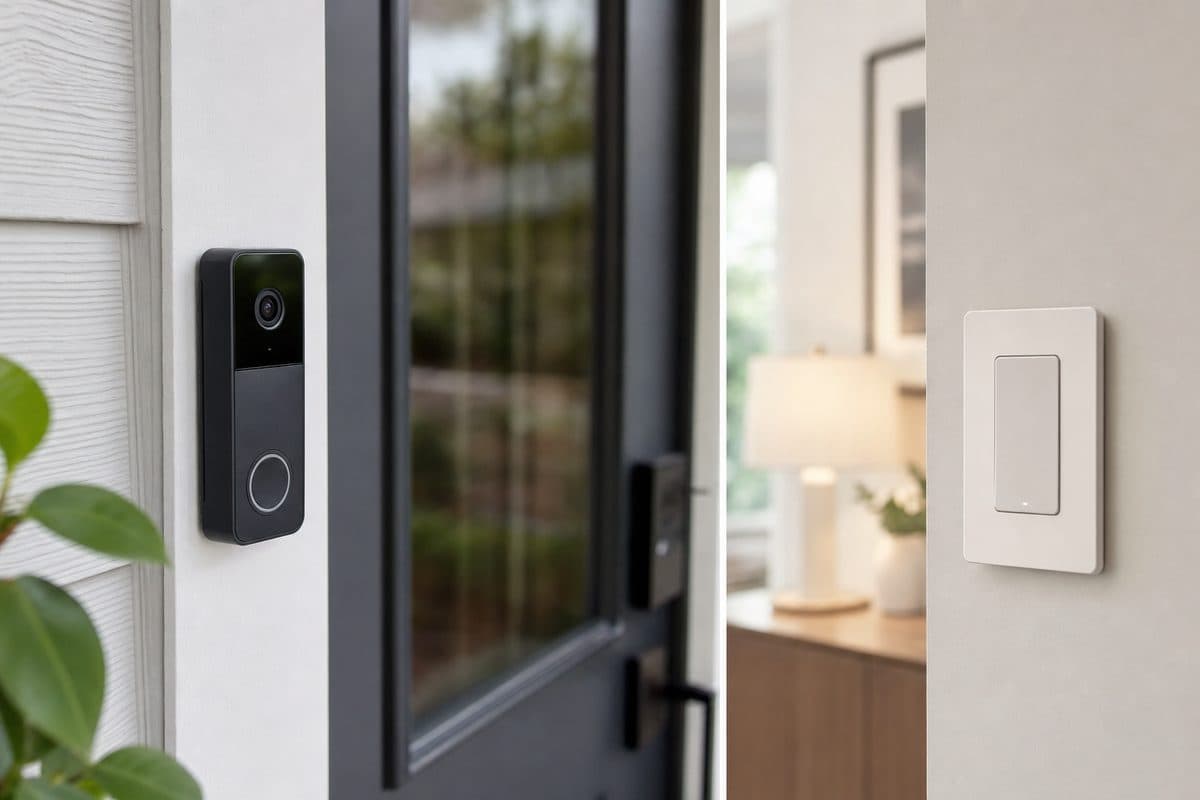
Smart home planning is easier when you define what you want each device to do and where it will go. A video doorbell, smart switch, occupancy sensor, hub, or connected control may each have different power needs, account features, and communication requirements. A clear list helps you compare products and helps an electrician understand what needs evaluation.
- List each planned device and its intended location.
- Note whether you want app control, voice control, automation, recording, alerts, or scheduling.
- Check whether devices need to work together in one ecosystem or can operate separately.
- Identify whether any device replaces an existing doorbell, switch, or control.
Power compatibility matters first
Electrical compatibility should be confirmed from the product instructions and by qualified evaluation where needed. For video doorbells, the existing low-voltage doorbell transformer and wiring often determine whether the device can be supported. For smart switches and dimmers, the existing branch wiring arrangement in the wall box can affect whether the chosen device is suitable. This is not a detail to guess on, because connected devices can have specific power expectations.
Doorbell transformers and low-voltage wiring
Many video doorbells depend on the condition and compatibility of the existing low-voltage setup. A professional may need to evaluate the transformer, the current doorbell wiring path, and whether the chime arrangement matches the product's requirements. If your home has an older system, recent remodeling, or an unclear wiring history, that is important information to share when requesting quotes.
- Whether there is an existing wired doorbell, battery doorbell, or no doorbell at all.
- Any history of weak chime performance, intermittent operation, or nonworking buttons.
- Whether you want to keep the existing chime behavior or change how alerts are handled.
- Photos of the doorbell location, chime area, and any visible labeling on existing equipment, if safely accessible.
Smart switches, neutrals, and box space
Smart switches and controls are not all interchangeable. Some products may need a neutral conductor, and physical box space can also matter when adding bulkier connected devices. Homes of different ages can have different wiring methods, so the presence of a neutral or enough room in the box should be professionally verified rather than assumed. Product instructions and qualified evaluation are the right basis for this decision.
Network placement and ecosystem choices
A smart device that fits electrically can still disappoint if Wi-Fi coverage is weak or if your chosen ecosystem is fragmented. Think about where devices are located relative to your router, any dead zones, and whether you want one app and one hub or are comfortable managing several platforms. The more devices you plan to add, the more important it becomes to choose an ecosystem deliberately.
- Check whether the front door, garage, porch, and switch locations have reliable signal coverage.
- Decide whether you prefer a single brand ecosystem or a mix of devices.
- Ask whether a hub or bridge is needed and where it would be placed.
- Consider who in the household needs access and how notifications will be shared.
Privacy, updates, and account security
Connected devices are also account and network devices, not just electrical products. CISA recommends thinking about security when selecting and using internet-connected devices, including using strong unique credentials and keeping software updated. For homeowners, that means reviewing the maker's update practices, account protections, and privacy settings before you buy, especially for devices with cameras, microphones, or cloud access.
What to include in an electrician quote request
A useful quote request should describe the devices you want, the existing equipment they may replace, and any known concerns about power, wiring, or connectivity. This helps the provider determine whether your project looks like a straightforward installation or whether more evaluation is needed. ElectricianQuotes can connect you with providers, but scope, availability, and pricing can vary by location and company.
- Brand and model numbers, or shortlists, for planned doorbells, switches, dimmers, sensors, hubs, and controls.
- Photos of existing doorbells, switch locations, chimes, and any visible labels, if safely accessible.
- Notes about older wiring, nonworking switches, inconsistent chimes, weak Wi-Fi areas, or remodeling history.
- Whether you want one device installed or a broader smart home plan across several rooms.
- Questions about compatibility, transformer evaluation, neutral-wire verification, and box-space assessment.
Once you have a device list, photos, and a few notes about your home's current setup, the next decision is whether you need a simple installation quote or a broader compatibility evaluation first. If the wiring history is unclear, the device requirements are specific, or you want several systems to work together, asking for evaluation details up front can lead to a more useful quote and fewer surprises.
Need help with doorbell installation?
Call ElectricianQuotes or check availability online for help with your electrical project.
Frequently asked questions
Can I assume my existing doorbell wiring will support any video doorbell?
No. Video doorbells can have specific power and wiring requirements. The existing low-voltage transformer, wiring condition, and chime arrangement may need qualified evaluation and review of the product instructions.
Do all smart switches need a neutral wire?
No universal rule applies across all products. Some smart switches may need a neutral conductor, and physical box space can also affect compatibility. An electrician can verify the existing wiring arrangement and whether the selected device is appropriate.
Is Wi-Fi the only planning issue for smart home devices?
No. Wi-Fi coverage matters, but so do electrical compatibility, device ecosystem choices, account security, software updates, and privacy settings. A device should fit both your home's wiring and your preferred control setup.
What makes an electrician quote request more useful for smart home work?
Include the device types or model numbers, photos of existing locations and equipment where safely accessible, notes about wiring or performance issues, and whether you want a single installation or a whole-home plan. That gives the provider a clearer picture of the scope and likely evaluation needs.
Sources and review
Technical and safety facts in this guide were checked against the listed sources on July 31, 2026. Cost and timing language is planning context, not a property-specific quote. Comparisons and next-step recommendations are editorial planning guidance; on-site findings determine the work.