Updated April 28, 2026Sources reviewed July 31, 20266 min read
Most of a home's wiring is hidden inside walls, so problems can go unnoticed for years. But old or unsafe wiring usually leaves clues you can see, smell, or feel. Learning to recognize them, without ever touching the wiring itself, helps you decide when to have your home evaluated by a qualified electrician.
Warning signs you can observe
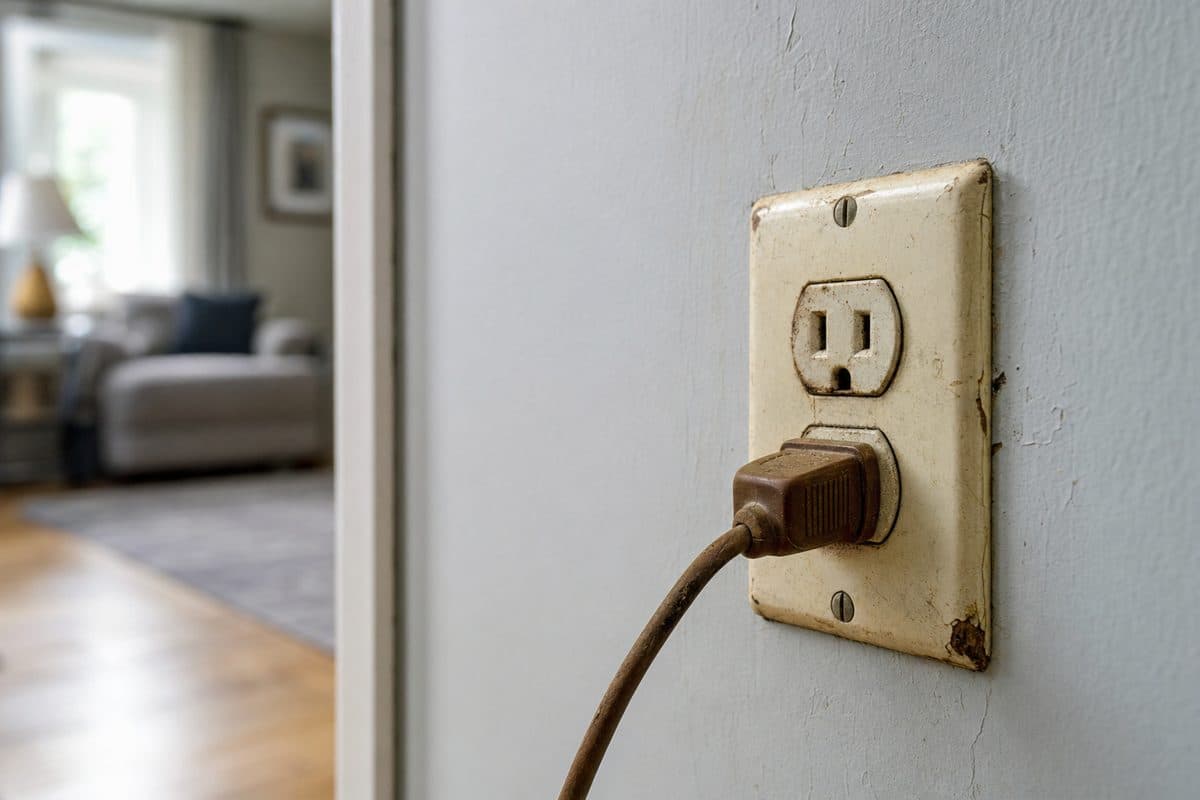
- Outlets or switch plates that are warm, discolored, or show scorch marks.
- A persistent burning or fishy odor near outlets, switches, or the panel.
- Buzzing or crackling sounds from outlets, switches, or fixtures.
- Frequent breaker trips or blown fuses.
- Lights that flicker or dim across the home.
- Outlets that spark when you plug something in.
- Two-prong outlets throughout the home, which can indicate older wiring without a ground.
Older wiring types worth knowing about
Some homes contain wiring methods that were standard in their era but call for professional evaluation today. You do not need to identify these yourself, an electrician will, but it helps to know the terms.
- Knob-and-tube wiring, found in many homes built before the mid-20th century.
- Aluminum branch wiring used in some homes of the 1960s and 70s.
- Cloth-insulated wiring whose insulation can become brittle with age.
- Ungrounded circuits served by two-prong outlets.
What to do if you notice the signs
- 1
Stop using affected areas
If an outlet or switch is warm, scorched, buzzing, or smells of burning, stop using it.
- 2
Make notes
Record where you see signs, what they are, and when they appear.
- 3
Arrange an evaluation
Connect with a qualified electrician for an inspection or assessment of the wiring.
- 4
Follow the recommendation
An electrician will explain whether a targeted repair or broader rewiring is appropriate.
ElectricianQuotes is a nationwide service that helps you understand wiring concerns and connect with electrician help in your area. Availability may vary by location and provider, and a qualified electrician will determine what your home actually needs.
Need help with wiring and rewiring?
Call ElectricianQuotes or check availability online for help with your electrical project.
Frequently asked questions
Is knob-and-tube wiring dangerous?
Knob-and-tube wiring is not automatically unsafe, but it is old, often lacks a ground, and can be compromised by modifications or added insulation. Repairs or replacement should always be evaluated and handled by a qualified electrician, never as a DIY project.
What does a warm or discolored outlet mean?
It can signal a loose connection, overload, or wiring problem behind the outlet. Stop using it and call an electrician. Do not remove the cover plate or work on the wiring yourself, as that should be handled by a qualified professional.
Do two-prong outlets mean my wiring is unsafe?
Two-prong outlets often indicate older, ungrounded wiring. That is not necessarily an emergency, but it is worth having a qualified electrician evaluate the wiring to confirm it is safe and to discuss options like grounding or upgrades.
Sources and review
Technical and safety facts in this guide were checked against the listed sources on July 31, 2026. Local code, permit, inspection, utility, and product requirements should be confirmed for the project address and equipment. Comparisons and next-step recommendations are editorial planning guidance; on-site findings determine the work.