Tuscaloosa, AL Recessed Lighting
Recessed Lighting Installation in Tuscaloosa, AL
Recessed lighting is a layout, ceiling, wiring, and control project. Fixture spacing, ceiling construction, insulation, access, beam pattern, trim, color temperature, and dimming should be coordinated before holes are cut. In Tuscaloosa, start with the affected equipment or project goal so the request can be matched to the right electrical scope without assuming a diagnosis.
- Electrician help around Tuscaloosa
- Help for repairs and electrical projects
- Call or check availability online
Updated July 26, 2026
Understanding recessed lighting installation in Tuscaloosa
Recessed lighting is a layout, ceiling, wiring, and control project. Fixture spacing, ceiling construction, insulation, access, beam pattern, trim, color temperature, and dimming should be coordinated before holes are cut. A useful first description for a Tuscaloosa, AL request is improving energy efficiency with LED options; an electrician can then evaluate the condition, access, and appropriate scope.
Local requirements in Tuscaloosa, AL depend on the project address and work. Confirm the responsible authority, serving utility, equipment details, access, and proposal assumptions instead of applying a rule or diagnosis from another location.
Start with the room layout and ceiling conditions
Describe the room use, dimensions, ceiling height and type, existing lighting, attic access, insulation, preferred fixture appearance, and control goals. Those details shape the layout and installation method.
What is happening
A finished room needs a new recessed-light layout
First call or action
Call ElectricianQuotes to plan fixture spacing and ceiling access(833) 962-0486Why
The installer should coordinate layout, joists, wiring routes, insulation, hole locations, switches, and patching before cutting.
What is happening
Open framing or a remodel is ready for lighting rough-in
First call or action
Call ElectricianQuotes before ceilings are closed(833) 962-0486Why
Fixture locations, circuits, controls, inspection timing, insulation, and other trade work should be coordinated during the open-wall phase.
What is happening
Existing recessed lights will be replaced or converted
First call or action
Call ElectricianQuotes to verify the existing housings and wiring(833) 962-0486Why
Opening size, housing condition, wiring, trim compatibility, dimmer compatibility, and ceiling finish affect the replacement options.
What is happening
A sloped, insulated, textured, or decorative ceiling is involved
First call or action
Call ElectricianQuotes to review fixture and access constraints(833) 962-0486Why
Ceiling assembly, insulation contact, slope, finish matching, joist layout, and repair visibility can change the product and labor plan.
What is happening
The new lights need dimming, zones, sensors, or smart controls
First call or action
Call ElectricianQuotes to plan fixtures and controls together(833) 962-0486Why
Drivers, lamps, dimmers, control wiring, neutral requirements, zones, and device locations should be compatible as a system.
What is happening
Existing recessed lights flicker, buzz, overheat, or fail repeatedlyFirst call or action
Call ElectricianQuotes for diagnosis before replacement(833) 962-0486Why
The issue may involve the lamp, trim, driver, housing, dimmer, connection, circuit, or heat management.
What is happening
There is active fire, visible smoke, or a serious electrical injury
First call or action
Leave the area and contact emergency servicesWhy
This is an immediate emergency rather than a lighting-layout project.
What recessed lighting installation can include
The proposal should define layout, fixture system, ceiling access, wiring, circuit and controls, insulation coordination, testing, and finish responsibilities.
Lighting layout and fixture selection
Fixture count, spacing, beam spread, output, trim, color temperature, ceiling height, room use, and glare goals should be planned together.
View related guidanceFinished-ceiling retrofit
Retrofit work can include exploratory access, joist and obstruction checks, wiring routes, precise cutouts, dust control, and defined patching exclusions.
View related guidanceNew-construction rough-in
Open framing allows fixture locations, wiring, supports, circuiting, controls, inspections, insulation, and drywall coordination to be sequenced.
View related guidanceDimming and control zones
Fixture and driver compatibility, dimmer type, switch locations, multi-location controls, sensors, and smart functions should be specified.
View related guidanceCeiling and insulation conditions
Ceiling slope, insulation, air-sealing goals, access, texture, decorative finishes, and other assemblies can affect product and installation choices.
Existing-light diagnosis
Flicker, buzzing, heat, uneven output, and repeated failure should be diagnosed before a new layout is treated as the remedy.
View related guidanceTuscaloosa service planning
No unsourced city rule is assumed here. Use the planning questions below to identify the authority, utility, access, and project details that apply to the address.
A useful starting scenario in Tuscaloosa
The clearest starting point in Tuscaloosa, Alabama is the observable condition or planned use, followed by the constraints an on-site evaluation still needs to resolve. A provider can evaluate this situation: Improving energy efficiency with LED options. Repair, installation, inspection, replacement, and planning choices should remain distinct.
Keep this factor visible in the comparison: Replacing old fixtures that no longer function well. It can separate a focused visit from a larger project without automatically requiring an upgrade. Before the appointment, use this non-invasive observation: Room dimensions, ceiling height and type, and the main areas that need light. Do not remove covers or open equipment.
Before authorization, confirm how the provider will handle this step and communicate any changed condition: Confirm room use, desired coverage, focal areas, fixture appearance, color temperature, dimming, zones, and control behavior. Keep local questions specific to the Tuscaloosa, Alabama address. The nearby supported cities Hoover, Birmingham, Vestavia Hills can help a visitor correct the route, not infer a local rule.
The proposal should make this item easy to verify and explain what the customer can expect before, during, and after the visit: What is the total number of recessed lights needed? This keeps the Tuscaloosa request focused on a useful customer decision instead of unsupported local assumptions.
Give each Tuscaloosa provider the same second scenario, "Replacing outdated or broken lighting fixtures". Ask each one to explain whether and how "Fixture count, spacing, beam spread, output, trim, color temperature, ceiling height, room use, and glare goals should be planned together" affects the recommended work.
Before selecting a Tuscaloosa proposal, compare the choice "New-construction rough-in" with the planned checkpoint "Inspect ceiling conditions". Ask this additional question in writing: Is the installation for new construction or a remodel?
Add a final Tuscaloosa, Alabama record for the need "I want recessed lighting" and the scope input "Retrofit work can include exploratory access, joist and obstruction checks, wiring routes, precise cutouts, dust control, and defined patching exclusions". Compare each provider's answer to "Will dimmer switches be part of the setup?" before authorizing work beyond the written proposal.
Use one Tuscaloosa, Alabama request summary for every provider: identify the Tuscaloosa, Alabama service address, the requested result "Updating the look of a room for a modern aesthetic", and the scope factor "Open framing allows fixture locations, wiring, supports, circuiting, controls, inspections, insulation, and drywall coordination to be sequenced". Keeping that same recessed lighting installation summary with each proposal makes differences in evaluation, included work, exclusions, and change approval easier to see. If the actual property belongs in Hoover, Birmingham, Vestavia Hills, use that supported city guide before requesting the quote.
Questions to confirm for the address
- What equipment specifications, access limits, circuit route, and finish restoration should the Tuscaloosa proposal identify?
- Is the project actually in Tuscaloosa, or should its local planning be checked on the supported Hoover or Birmingham service page?
- Which authority handles permits and inspections for this recessed lighting installation scope at the Tuscaloosa project address?
- Which utility serves the address, and does the work involve customer-owned equipment, utility-owned equipment, or both?
- Which authority handles permits and inspections for the project address in Tuscaloosa?
- Which utility delivers electricity to the property in Tuscaloosa?
Alabama context to confirm
Use these questions to confirm current state responsibilities without turning a general planning point into an unsupported requirement.
- Which state-level requirements apply to recessed lighting installation at this address in Alabama?
- Which licensing or credential authority applies to the work in Alabama?
- Which authority handles permits and inspections for the project address?
- Which utility delivers power to the property, and where is its equipment-ownership boundary?
- What site access, existing equipment, and restoration work can affect the project scope?
Common issues connected to recessed lighting installation
Choose the symptom that most closely matches what you are seeing. Each guide explains useful observations and the service that may fit.

Budgeting for recessed lighting installation in Tuscaloosa
The table is a national planning reference, not a city-specific quote. The final price depends on diagnosis, access, materials, permits, and the work required.
Recessed lighting is usually priced per light, but room layout, ceiling access, insulation clearance, wiring routes, controls, and the number of fixtures determine the useful project total.
Number of lights being installed.
Type of fixtures: new construction or retrofit.
Ceiling accessibility and complexity of the job.
Additional features like dimmers or smart controls.
| Scope | Typical range | What it usually involves |
|---|---|---|
| Retrofit an existing opening | $100-$250 | Compatible opening and usable existing wiring |
| New recessed light | $175-$400 | Standard fixture with a straightforward ceiling and wiring route |
| Difficult access or custom controls | $275-$650 | High ceilings, blocked bays, premium trims, or added dimming controls |
Cost ranges are estimates developed from standardized project scopes and reviewed pricing inputs. Government labor and regional cost data are used where applicable. See our Pricing Methodology for the exact sources, calculations, and review date. Actual prices vary by property, scope, materials or equipment, location, and provider.
How a recessed lighting project should proceed
The installer should turn the lighting goal into a verified layout, product, access, wiring, and control plan before cutting begins.
- 1
Define the lighting goal
Confirm room use, desired coverage, focal areas, fixture appearance, color temperature, dimming, zones, and control behavior.
- 2
Inspect ceiling conditions
Review ceiling height and construction, framing direction, access, insulation, obstructions, existing wiring, texture, and finish sensitivity.
- 3
Set the fixture layout
Coordinate spacing and alignment with joists, cabinets, fans, sprinklers, HVAC, furniture, work surfaces, and architectural features.
- 4
Plan circuits and controls
Define the circuit source, wiring route, fixture system, drivers, dimmers, switches, sensors, smart controls, permits, and inspections.
- 5
Install and coordinate finishes
Complete cutouts, wiring, fixtures, trims, controls, testing, dust control, and the agreed patching or painting responsibilities.
- 6
Aim, test, and document
Verify every light and control, check dimming behavior and layout consistency, and document product information and exclusions.
Before you hire: what to ask
Compare recessed-lighting quotes by fixture layout, product family, ceiling access, wiring and controls, finish work, and included testing.
- How many fixtures, which product family, and what layout is included?
- What output, trim, color temperature, beam, and dimming assumptions apply?
- Is the work retrofit in a finished ceiling or coordinated with open framing?
- Are circuits, wiring, drivers, switches, dimmers, zones, sensors, and smart controls included?
- How will joists, insulation, ceiling slope, texture, and hidden obstructions be handled?
- Who handles exploratory access, patching, texture matching, painting, dust control, and cleanup?
- Are permits, inspections, fixture supply, disposal, and product setup included?
- What layout or concealed condition could change the scope or price?
- What is the total number of recessed lights needed?
- Is the installation for new construction or a remodel?
- Will dimmer switches be part of the setup?
- Are there any access issues to the ceiling space?
Get connected with recessed lighting installation help in Tuscaloosa
Call ElectricianQuotes or check availability online for help with your electrical project.
Common questions about recessed lighting installation in Tuscaloosa
How should I start a recessed lighting installation request in Tuscaloosa?
Start with the main decision: What recessed-lighting layout, housing or wafer type, controls, ceiling access, and insulation conditions shape the project? Describe the affected equipment or project goal, when the issue began, and any visible change. Do not open, remove, or handle electrical equipment to gather more detail.
What local detail should I confirm for recessed lighting installation in Tuscaloosa?
What equipment specifications, access limits, circuit route, and finish restoration should the Tuscaloosa proposal identify? Requirements can depend on the exact address and work, so the proposal should identify the authority or utility being relied on instead of assuming one rule covers every Tuscaloosa project.
What should a Tuscaloosa recessed lighting installation quote explain?
Ask the proposal to define the work, assumptions, materials, and access. It should also answer this comparison question: Are there any access issues to the ceiling space? Compare the described scope as well as the price so differences between proposals are visible.
How does the Alabama location affect this project?
State and local responsibilities can vary by scope and address. Confirm the current credential, permit, inspection, and utility questions that apply before work begins rather than relying on a rule from another market.
Sources and editorial review
Updated July 26, 2026. Service guidance is checked against the safety and consumer sources below. When this page makes a city-specific statement about permits, inspections, or utility service, the supporting local source is included here.
Nearby cities
Browse recessed lighting installation information for nearby covered communities.
View recessed lighting across Alabama


Helpful resources
Helpful recessed lighting installation guides
Learn about common issues, costs, and what to expect before requesting service.
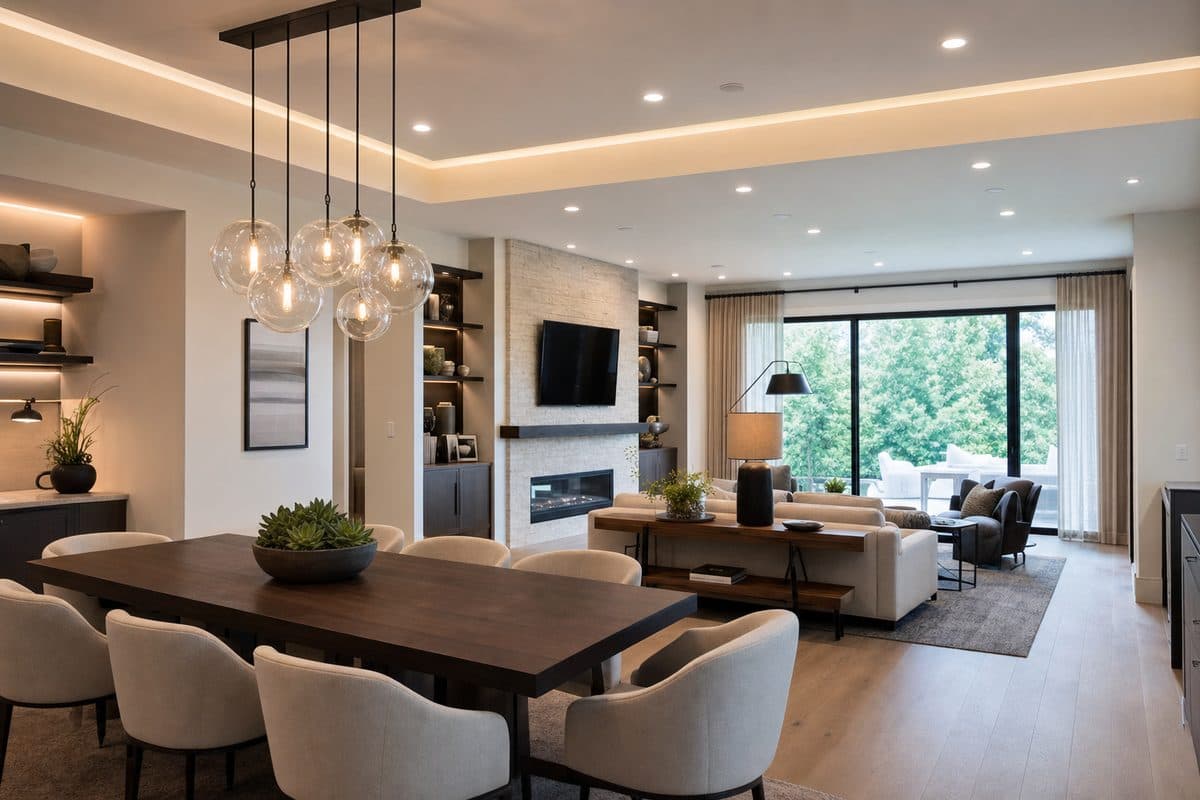
Need recessed lighting installation help in Tuscaloosa?
Call ElectricianQuotes to connect with help for repairs, panels, breakers, outlets, switches, lighting, EV chargers, inspections, wiring, and more.
Call (833) 962-0486 to talk through the electrical problem and check electrician availability.