Updated July 18, 2026
Quick answer
Match the pattern to a safe next step
These observations narrow the starting point. They do not prove which component or connection failed.
What you notice
The buzz changes with the dimmer level
What it may mean
The lamp and control may not be compatible or the dimmer may be overloaded
Safe next action
Keep the light off until the lamp and control ratings are checked
What you notice
One fixture buzzes at full brightness
What it may mean
A lamp driver, ballast, socket, or fixture component may be failing
Safe next action
Stop using the fixture if the sound is new or growing
What you notice
The sound comes from the switch or wall instead of the fixture
What it may mean
A device or connection may be loose or arcing
Safe next action
Keep the switch off and request prompt service
Choose the right first call
Electrician, utility, or emergency services?
Start with the row that matches the visible situation. This routes the request; it does not diagnose the electrical cause remotely.
Call ElectricianQuotes for Electrical Repair
Request electrical repair to evaluate the affected equipment and circuit, confirm the cause on site, and define the repair or replacement scope.
Contact the utility for an outage or utility-owned equipment
The utility is not usually the first call when lights or fixture are buzzing is limited to one device, circuit, or customer-owned system. Check for a broader outage only when other areas or nearby properties are also affected.
Use emergency services for an immediate life-safety event
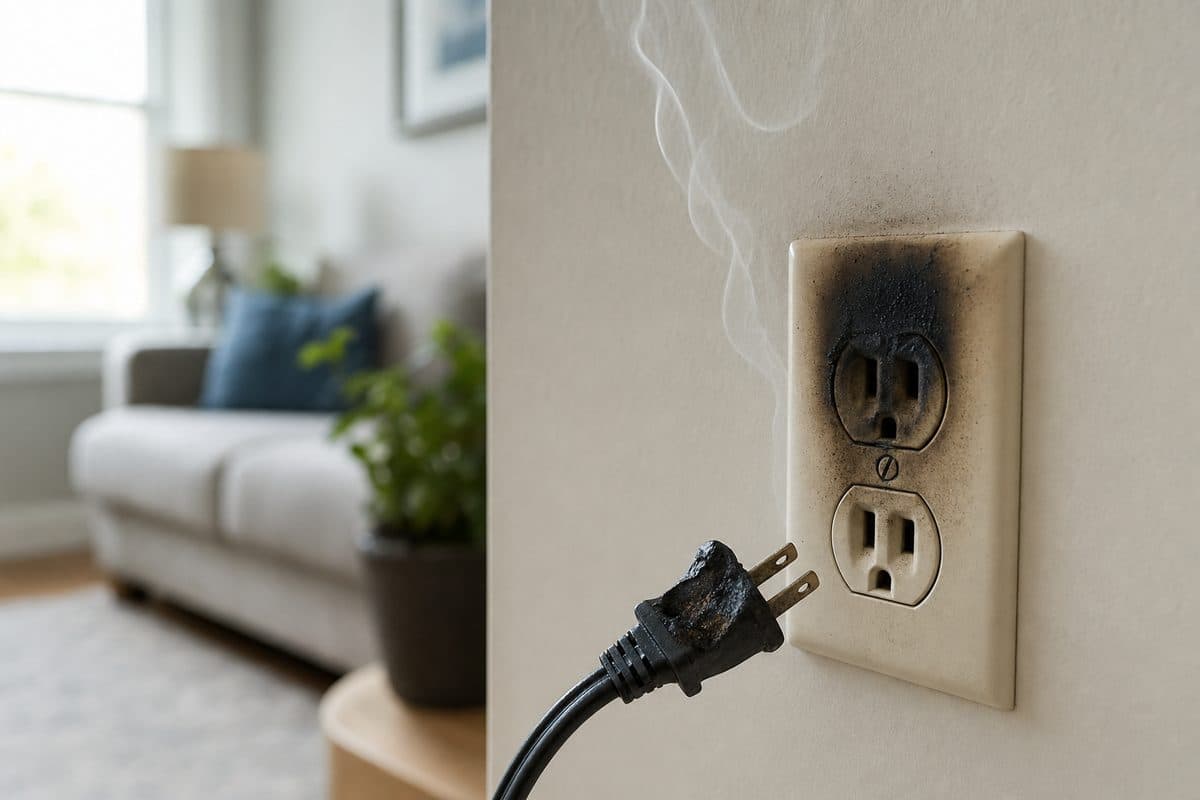
From a safe location, contact emergency services if you observe heat, smoke, sparks, or a burning odor, crackling from the wall or switch, or visible melting or discoloration.
What you can do safely
- Identify whether the sound comes from the bulb, fixture, or switch
- Confirm the lamp type and fixture rating when power is off
- Note whether heat, odor, or flicker is also present
Leave these steps to an electrician
- Do not open the fixture or switch box
- Do not keep dimming through a loud buzz
- Do not exceed the fixture wattage rating
A few quick questions
Refine the best next step
Question 1 of 2
Professional diagnosis
What an electrician may check
- Confirm or reproduce the reported lights or fixture are buzzing pattern without bypassing a breaker, GFCI, interlock, or other protective device.
- Inspect the affected equipment, circuit, accessible connections, and protection for heat, damage, moisture, or improper loading.
- Measure voltage, load, continuity, grounding, and fault conditions as appropriate to the equipment and local requirements.
- Explain whether Electrical Repair is the right repair path or whether another specialist, utility response, or upgrade is needed.
Cost planning
Plan for the service scope, not the symptom alone
The symptom alone does not set the price. Use the national electrical repair ranges below to compare the likely service scope, then ask what testing, parts, permits, access, restoration, and follow-up are included in the written quote.
Minor or limited scope
$150-$425
A single outlet, switch, or simple fix; the quote should confirm access, testing, materials, and exclusions.
Typical project scope
$350-$1,100
Tracing a fault or fixing several devices on a circuit
Complex project scope
$1,000-$4,200
Work involving wiring runs or the panel; the quote should confirm access, testing, materials, and exclusions.
Major or combined scope
Project-specific quote
A broader electrical repair project that combines multiple scope decisions, requires added electrical capacity, or reveals related system work after evaluation.
Cost ranges are estimates developed from standardized project scopes and reviewed pricing inputs. Government labor and regional cost data are used where applicable. See our Pricing Methodology for the exact sources, calculations, and review date. Actual prices vary by property, scope, materials or equipment, location, and provider.
A written quote should state the diagnostic work, repair scope, equipment, permit or inspection responsibility, restoration, and change-order process that apply to the property.
View full cost guideRecommended services
Where to start
Start with the first service below. An electrician can confirm whether a related service is needed after inspecting the problem.


Prepare for the call
What to tell the electrician
- Which visible pattern is closest: the buzz changes with the dimmer level, one fixture buzzes at full brightness, or the sound comes from the switch or wall instead of the fixture.
- When it started, how often it happens, and what equipment was operating immediately beforehand.
- Whether you noticed heat, smoke, sparks, or a burning odor, crackling from the wall or switch, or visible melting or discoloration without touching or opening equipment.
Related electrical issues
Compare the closest visible pattern
Choose another guide only when it better matches what you can observe. The electrician still confirms the cause on site.


Frequently asked questions
Lights or fixture are buzzing: common questions
Is lights or fixture are buzzing an electrical emergency?
It becomes an emergency when there is smoke, fire, active sparking, serious shock, energized water, or rapidly increasing heat. Without those signs, follow the stop-use or scheduling guidance above.
Can I keep using the affected circuit or equipment?
Do not keep operating equipment that is hot, damaged, wet, odorous, noisy, sparking, shocking, or repeatedly tripping protection. Leave it off until it is evaluated.
Which electrician service should I request?
Electrical Repair is the best starting service for this visible symptom. The electrician may recommend a different repair, utility response, specialty service, or upgrade after testing the actual cause.
Sources and review standard
Updated July 18, 2026 and reviewed July 18, 2026. ElectricianQuotes reviews issue guides for clear first steps, appropriate service routing, source quality, and unsupported claims. An on-site electrician still needs to confirm the cause.