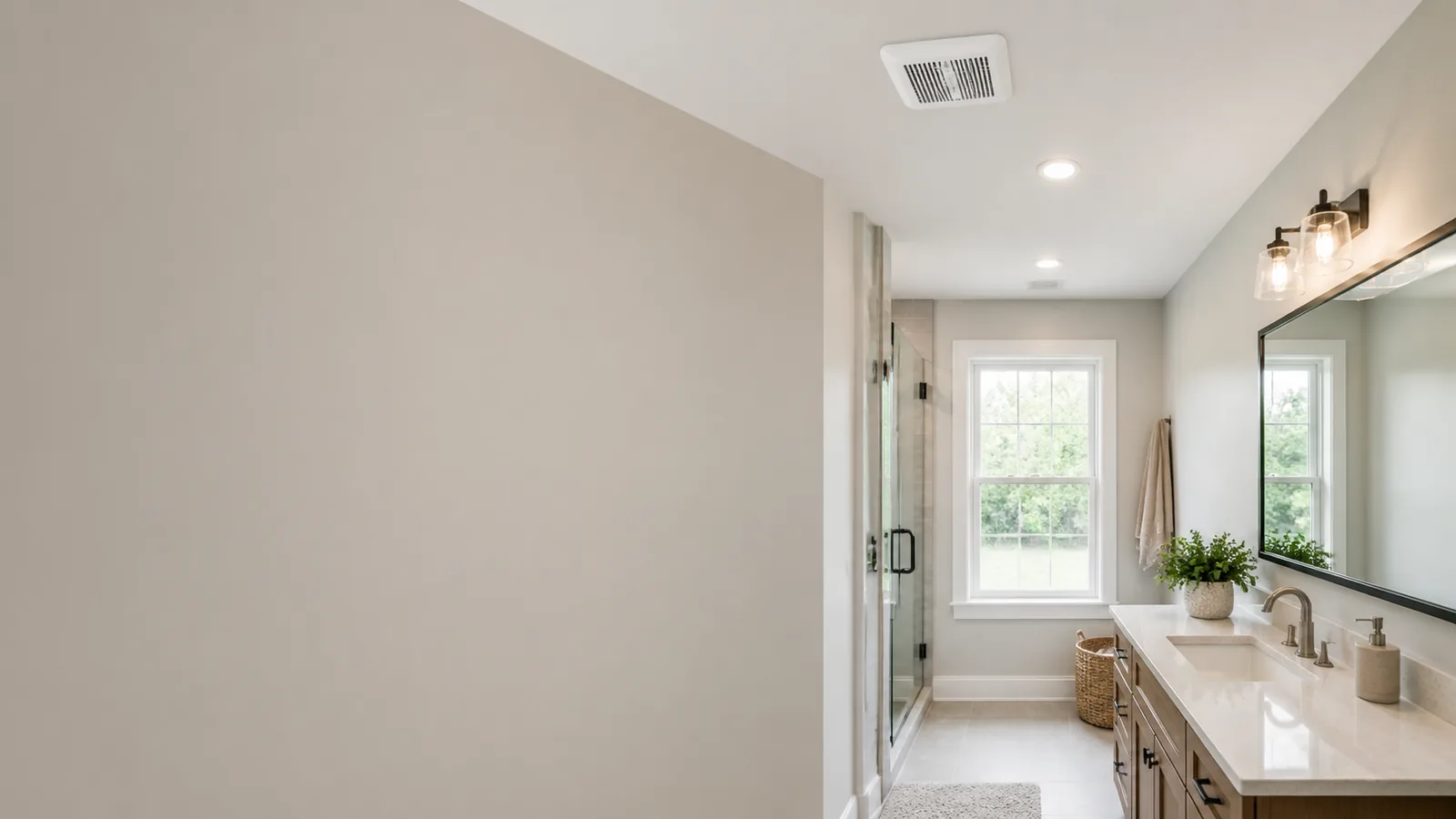
Bath Fan Install guide
Bathroom Exhaust Fan Installation
Bathroom exhaust fan installation combines electrical, ventilation, ceiling, and exterior-termination decisions. Fan selection, room use, duct route, outlet location, controls, access, and finish work should be defined together.
Updated July 26, 2026
Bathroom Exhaust Fan Installation, explained
The key decision is: What fan capacity, duct path, exterior termination, wiring, and control plan fit the bathroom? A useful installation scope connects the selected equipment and location to wiring, capacity, access, controls, testing, and finish responsibilities.
Start with the affected equipment or area, the visible condition or desired result, and any recent change. The sections below explain the scope choices and quote details that matter for bath fan install.
When to plan bath fan install
Define the equipment, location, intended use, existing conditions, and finish expectations before comparing installation proposals.
Needs and situations this service covers
- I need a bathroom fan installed
- Excessive moisture or steam in the bathroom.
- Visible mold or mildew growth.
- Renovating or updating the bathroom.
- Replacing a noisy or malfunctioning fan.
What can change the scope
- Old or broken exhaust fan.
- Bathroom remodel or upgrade.
- Inadequate ventilation leading to moisture issues.
- Desire for energy-efficient or quieter models.
- Removal, housing fit, wiring, controls, duct connection, grille, testing, disposal, and ceiling touch-up responsibilities should be listed.
- A new location can add ceiling cutting, support, wiring, switch or timer, circuit review, duct routing, exterior termination, and finish work.
What fan capacity, duct path, exterior termination, wiring, and control plan fit the bathroom?
The quote should identify the fan, housing and opening, power and controls, duct and exterior termination, access, testing, and finish responsibilities.
Fan-for-fan replacement
Removal, housing fit, wiring, controls, duct connection, grille, testing, disposal, and ceiling touch-up responsibilities should be listed.
New fan location
A new location can add ceiling cutting, support, wiring, switch or timer, circuit review, duct routing, exterior termination, and finish work.
Fan-light-heater combinations
Multiple functions may require compatible controls, additional conductors or circuits, equipment clearances, and coordinated installation.
Duct and exterior termination
Duct size and route, insulation, supports, dampers, roof or wall cap, weather sealing, and trade ownership should be explicit.
Timer and humidity controls
Control type, wiring, sensor location, user settings, manual operation, and fan compatibility may be included in the electrical scope.
Existing fan diagnosis
Noise, weak airflow, intermittent operation, and failed controls should be traced to the fan, duct, control, wiring, or power source before replacement is assumed.
Useful observations and electrical safety boundaries
Share what you can observe without opening equipment or touching wiring. Energized testing, disassembly, and repair belong to a qualified electrician.
Useful details to note
- Existing fan model or grille dimensions and the desired replacement model
- Bathroom dimensions, ceiling height, fan location, and available attic or ceiling access
- Known duct route and visible exterior roof or wall vent location
- Desired light, heater, timer, humidity-control, and switch behavior
- Listen for unusual noises from the existing fan.
- Check for visible mold or mildew in the bathroom.
Leave these steps to an electrician
- Do not remove the fan housing or expose wiring to measure the opening
- Do not enter an attic without a safe walking surface and appropriate access
- Do not route exhaust into an attic, wall cavity, or other concealed space
- Do not keep using a fan or switch that is hot, sparking, scorched, or producing a burning odor
- Ensure the fan is always vented to the outside to prevent moisture buildup.
- Never attempt to install or replace electrical fixtures without professional help.
Warning signs to mention when requesting help
There is active fire, visible smoke, or a serious electrical injury; When the current fan is not functioning.; To upgrade to a newer model with additional features.; If there are signs of moisture damage.; For a new installation in a bathroom without a fan..
How an electrician plans bath fan install
The exact sequence depends on the selected equipment, existing electrical system, route, access, and findings at the property.
- 1
Define the ventilation and control goal
Confirm fan functions, room use, noise preference, light or heater features, timer or humidity control, and desired operation.
- 2
Inspect existing conditions
Review the opening, support, wiring, circuit, switches, duct connection, ceiling access, exterior termination, and visible damage.
- 3
Select fan and route
Match the fan and housing to the project and define the duct path, exterior outlet, supports, insulation, damper, and weather sealing.
- 4
Assign trade and finish responsibilities
State who handles electrical work, duct, roof or siding penetration, framing, ceiling repair, painting, permits, and inspection.
- 5
Install and coordinate
Complete the housing, wiring, controls, duct connection, grille, exterior termination, sealing, and agreed restoration.
- 6
Test the complete system
Verify fan, light or heater, switches and controls, airflow path, damper operation, noise, and exterior discharge.
- 7
Assess the Bathroom's Ventilation Needs
Determine the correct fan size based on the bathroom's square footage and ventilation requirements.
Get bathroom exhaust fan installation help
Call or request availability to connect with electrician help.
What affects bath fan install cost
Bathroom exhaust fan cost depends heavily on whether an electrician is replacing a fan on usable wiring and ductwork or creating a new exterior vent route. Fan size, noise rating, lighting, sensors, ceiling access, and finish work also matter. Treat published ranges as planning references rather than a quote for a particular property.
Type of fan (basic, with light, humidity-sensing)
Bathroom size and ventilation needs
Existing ductwork or need for new venting
Electrical wiring requirements
| Scope | Typical range | What it usually involves |
|---|---|---|
| Replace fan on existing duct | $275-$725 | Usable wiring, housing location, and exterior duct |
| New fan or fan-light combination | $475-$1,200 | New housing with a practical wiring and vent route |
| New duct or difficult access | $1,000-$2,800 | Exterior venting, roof or wall access, controls, or finish work |
Cost ranges are estimates developed from standardized project scopes and reviewed pricing inputs. Government labor and regional cost data are used where applicable. See our Pricing Methodology for the exact sources, calculations, and review date. Actual prices vary by property, scope, materials or equipment, location, and provider.
How to compare the written scope and quote
Compare what each proposal includes, what assumptions it makes, and how findings that change the scope will be handled, not only the total price.
- Which fan model, housing, functions, and controls are included?
- Does the existing opening, support, circuit, and wiring work as-is?
- What duct route, material, insulation, damper, and exterior termination are included?
- Who handles roof, siding, framing, ceiling, drywall, painting, and weather sealing?
- Are new wiring, a circuit, switches, timers, humidity controls, or heater connections included?
- Are access equipment, attic work, permits, inspections, disposal, and cleanup included?
- How will electrical operation, controls, duct connection, and exterior airflow be tested?
- What hidden duct, framing, wiring, or exterior condition could change the scope?
Common issues related to bath fan install
Choose the closest visible symptom for a focused explanation of urgency, useful observations, and the service that may fit.

Bathroom Exhaust Fan Installation: common questions
How do I know what size fan I need?
Fan size is determined by the bathroom's square footage. Generally, a fan should have a CFM (cubic feet per minute) rating that matches the bathroom size.
Can I install a fan with a light?
Yes, many models combine a fan and light. This can be a space-saving and functional option for bathrooms.
Why is venting to the outside important?
Venting to the outside ensures moisture is expelled from the home, preventing mold and humidity damage.
What features should I consider in a new fan?
Consider noise level, energy efficiency, additional lighting, and humidity-sensing capabilities when selecting a new fan.
Sources and editorial review
Service guidance is checked against the government, safety, and consumer sources below. Equipment instructions, site conditions, and the requirements that apply to a specific address can still change the right scope.


Helpful resources
Plan bath fan install with clearer information
Use these related guides to understand the scope, prepare useful questions, and compare electrical proposals.
Nationwide coverage
Bathroom Exhaust Fan Installation by state and city
Select a state or popular city to view bath fan install guidance and check electrician availability in that area.
Get bathroom exhaust fan installation help
Call or request availability to connect with electrician help.
Call (833) 962-0486 to talk through the electrical problem and check electrician availability.