Denver, CO Transfer Switch
Transfer Switch Installation in Denver, CO
Transfer equipment provides a controlled path between normal utility power and an approved backup source. The correct design depends on the generator, service arrangement, backed-up loads, connection method, operating sequence, and other power systems at the property. In Denver, start with the affected equipment or project goal so the request can be matched to the right electrical scope without assuming a diagnosis.
- Electrician help around Denver
- Help for repairs and electrical projects
- Call or check availability online
Updated July 26, 2026
Understanding transfer switch installation in Denver
Transfer equipment provides a controlled path between normal utility power and an approved backup source. The correct design depends on the generator, service arrangement, backed-up loads, connection method, operating sequence, and other power systems at the property. A useful first description for a Denver, CO request is i need a transfer switch; an electrician can then evaluate the condition, access, and appropriate scope.
Local requirements in Denver, CO depend on the project address and work. Confirm the responsible authority, serving utility, equipment details, access, and proposal assumptions instead of applying a rule or diagnosis from another location.
Start with the generator and the loads it will supply
Identify the generator model or output, portable or standby use, selected circuits or broader backup goal, and whether solar, battery storage, or another source is connected to the property.
What is happening
A portable generator needs a safe connection to selected home circuits
First call or action
Call ElectricianQuotes to plan the transfer equipment and inlet(833) 962-0486Why
The generator output, connection, selected loads, panel arrangement, cable route, operating sequence, and equipment compatibility should be reviewed together.
What is happening
A standby generator needs automatic transfer equipment
First call or action
Call ElectricianQuotes to coordinate the generator, transfer switch, and service(833) 962-0486Why
The transfer rating and configuration, generator controls, service arrangement, load management, conductors, and commissioning need a matched design.
What is happening
Only certain circuits should operate on generator power
First call or action
Call ElectricianQuotes to define the selected-load arrangement(833) 962-0486Why
The priority circuits, starting loads, panel space, transfer equipment, controls, and future changes should be documented before installation.
What is happening
The property has solar, batteries, or another power source
First call or action
Call ElectricianQuotes for multi-source coordination(833) 962-0486Why
The transfer sequence and equipment must account for every connected source and the operating modes allowed by the installed systems.
What is happening
An existing generator runs but transferred circuits remain offFirst call or action
Call ElectricianQuotes for transfer-system diagnosis(833) 962-0486Why
The generator output, feeder, inlet, breakers, transfer mechanism, controls, wiring, and selected-load panel may need testing.
First call or action
Keep the system out of use and call ElectricianQuotes(833) 962-0486Why
The transfer switch, connections, controls, and associated panel or generator equipment need prompt evaluation.
What is happening
There is active fire, visible smoke, or a serious electrical injury
First call or action
Leave the area and contact emergency servicesWhy
This is an immediate emergency rather than a transfer-switch project.
What transfer switch installation can include
The proposal should identify the backup source, transfer equipment, normal source, selected loads, service and panel work, controls, routes, approvals, testing, and owner operation.
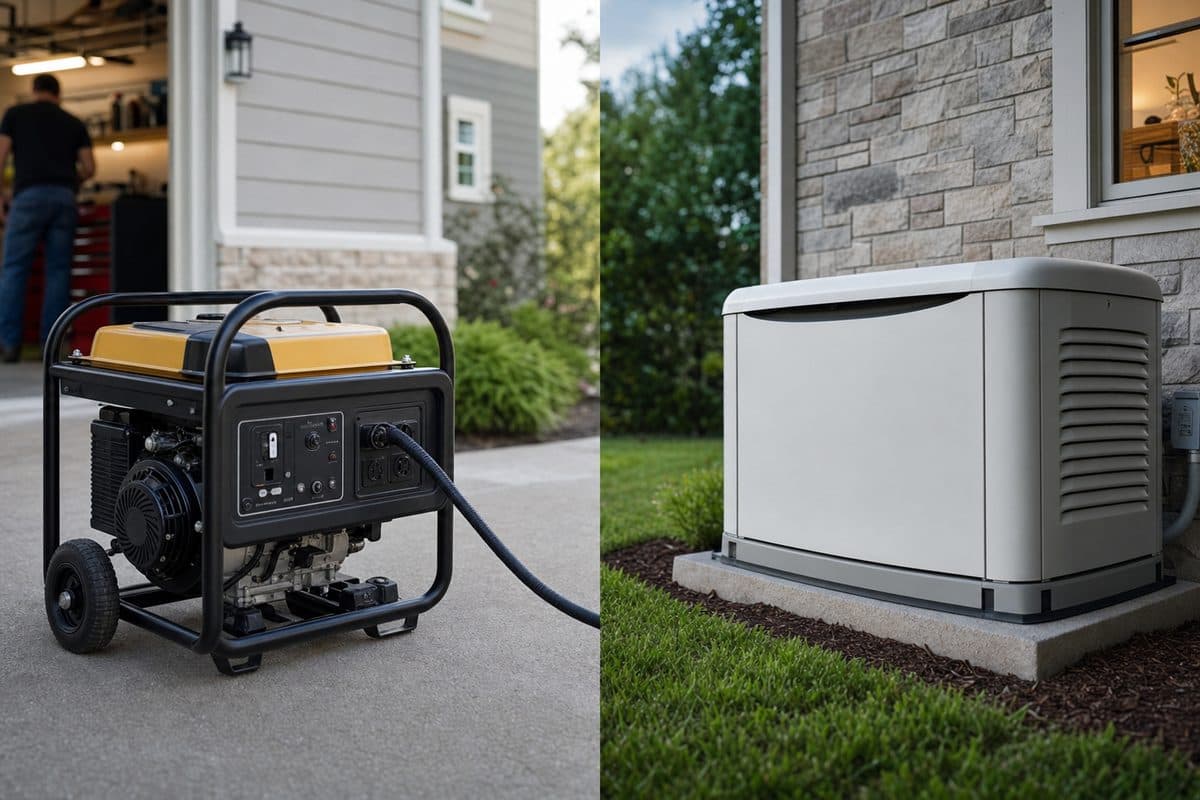
Manual transfer for portable generators
A transfer device or approved interlock approach, inlet, cable, panel work, selected loads, labels, operating sequence, and testing may be included.
View related guidanceAutomatic transfer for standby systems
The generator controls, transfer equipment, service connection, conductors, load management, accessories, startup, and commissioning should be coordinated.
View related guidanceSelected-load panels and circuits
The circuits intended for backup, panel arrangement, load priorities, simultaneous use, circuit moves, labeling, and future capacity should be defined.
Service-rated and whole-property arrangements
Service configuration, equipment ratings, disconnects, conductors, grounding and bonding, metering or utility interfaces, and load management may affect scope.
View related guidanceMultiple power sources
Solar, battery storage, generators, utility service, and energy controls need a documented sequence that reflects the actual approved equipment.
Existing-system repair or replacement
Mechanical transfer problems, failed controls, damaged contacts, wiring faults, incorrect setup, and obsolete or incompatible equipment may require diagnosis.
View related guidanceDenver service planning
No unsourced city rule is assumed here. Use the planning questions below to identify the authority, utility, access, and project details that apply to the address.
A useful starting scenario in Denver
The clearest starting point in Denver, Colorado is the observable condition or planned use, followed by the constraints an on-site evaluation still needs to resolve. A relevant starting example is: If experiencing frequent power outages. The proposal should explain how the findings support the recommended path.
Compare the available path called "Selected-load panels and circuits", then ask how this factor affects that decision at the property: The generator controls, transfer equipment, service connection, conductors, load management, accessories, startup, and commissioning should be coordinated. Before the appointment, use this non-invasive observation: Check if your generator is compatible with a transfer switch. Do not remove covers or open equipment.
Before authorization, confirm how the provider will handle this step and communicate any changed condition: Verify normal utility operation, backup operation, transfer and retransfer, selected loads, load management, shutdown, and the owner procedure. Use the Denver, Colorado page for this address and compare Aurora, Commerce City, Englewood only when confirming that a nearby supported market is the correct location.
Ask each provider the same quote question and record how the answer changes the included work or project expectations: Is the generator compatible with the selected transfer switch? This keeps the Denver request focused on a useful customer decision instead of unsupported local assumptions.
Prepare the Denver request by recording a second relevant use case, "When ensuring compliance with local electrical codes", and a second scope driver, "The circuits intended for backup, panel arrangement, load priorities, simultaneous use, circuit moves, labeling, and future capacity should be defined". Those details help a provider explain why the proposed work fits this property.
A second Denver planning note should identify the option "Service-rated and whole-property arrangements" and the checkpoint "Initial Assessment". Use this quote question to test whether both are covered: Are there any additional permits required for installation?
Keep one last Denver, Colorado decision line for "I need a transfer switch". It should show how "Service configuration, equipment ratings, disconnects, conductors, grounding and bonding, metering or utility interfaces, and load management may affect scope" affects the work, whether "Choosing the Right Transfer Switch" is included, and what remains subject to evaluation.
Use one Denver, Colorado request summary for every provider: identify the Denver, Colorado service address, the requested result "When installing a new generator system", and the scope factor "Solar, battery storage, generators, utility service, and energy controls need a documented sequence that reflects the actual approved equipment". Keeping that same transfer switch installation summary with each proposal makes differences in evaluation, included work, exclusions, and change approval easier to see. If the actual property belongs in Aurora, Commerce City, Englewood, use that supported city guide before requesting the quote.
Questions to confirm for the address
- Which utility serves the address, and does the work involve customer-owned equipment, utility-owned equipment, or both?
- Which authority handles permits and inspections for the project address in Denver?
- Which utility delivers electricity to the property in Denver?
- What equipment, access, circuit route, and finish restoration affect the service scope?
- Which service-specific state facts and nearby location links help plan the next step?
- What equipment specifications, access limits, circuit route, and finish restoration should the Denver proposal identify?
Colorado context to confirm
Use these questions to confirm current state responsibilities without turning a general planning point into an unsupported requirement.
- Which state-level requirements apply to transfer switch installation at this address in Colorado?
- Which licensing or credential authority applies to the work in Colorado?
- Which authority handles permits and inspections for the project address?
- Which utility delivers power to the property, and where is its equipment-ownership boundary?
- What site access, existing equipment, and restoration work can affect the project scope?
Common issues connected to transfer switch installation
Choose the symptom that most closely matches what you are seeing. Each guide explains useful observations and the service that may fit.


Budgeting for transfer switch installation in Denver
The table is a national planning reference, not a city-specific quote. The final price depends on diagnosis, access, materials, permits, and the work required.
The cost of installing a transfer switch varies based on switch type, installation complexity, and local rates.
Type of transfer switch: manual or automatic.
Complexity of installation and electrical system.
Local labor rates and permit fees.
Generator compatibility and additional equipment needed.
| Scope | Typical range | What it usually involves |
|---|---|---|
| Basic Manual Transfer Switch | $1,000-$2,400 | Includes basic installation with minimal complexity. |
| Standard Automatic Transfer Switch | $2,200-$5,500 | Includes installation and integration with existing systems. |
| Complex Installation | $4,600-$11,400 | Involves extensive coordination or additional upgrades. |
Cost ranges are estimates developed from standardized project scopes and reviewed pricing inputs. Government labor and regional cost data are used where applicable. See our Pricing Methodology for the exact sources, calculations, and review date. Actual prices vary by property, scope, materials or equipment, location, and provider.
How transfer switch installation should proceed
The electrician should verify the sources and loads, select compatible transfer equipment, define service and panel changes, then test every operating mode.
- 1
Document sources and backup loads
Identify utility service, generator, solar or storage, intended circuits, starting loads, controls, and operating priorities.
- 2
Inspect service and panel conditions
Review equipment ratings, panel arrangement, breaker space, service disconnects, grounding and bonding, routes, and existing generation connections.
- 3
Select compatible transfer equipment
Match the transfer method, ratings, poles, controls, generator connection, selected-load design, enclosure, and accessories to the verified system.
- 4
Define installation and approvals
Plan service interruptions, panel and circuit changes, inlet or feeder routes, labels, permits, inspection, utility steps, access, and restoration.
- 5
Install and configure
Complete the transfer equipment, conductors, inlet or generator connection, selected-load work, controls, labels, settings, and documentation.
- 6
Test every operating mode
Verify normal utility operation, backup operation, transfer and retransfer, selected loads, load management, shutdown, and the owner procedure.
Before you hire: what to ask
Compare transfer-switch quotes by exact equipment, sources and loads, service and panel work, controls, approvals, testing, and operating documentation.
- Which generator or backup source and which loads is the transfer design based on?
- Which transfer switch, interlock, inlet, selected-load panel, controls, cables, and accessories are included?
- What service, panel, breaker, conductor, grounding, or bonding work is included?
- How are solar, batteries, EV charging, HVAC, pumps, and other controlled loads addressed?
- Who handles generator equipment, fuel work, service interruption, trenching, access, and finish restoration?
- Are permits, inspection, utility coordination, labels, and commissioning included when required?
- How will normal power, backup power, transfer, retransfer, load management, and shutdown be tested?
- What compatibility, site, service, equipment, or load condition could change the proposal?
- What type of transfer switch is needed: manual or automatic?
- Is the generator compatible with the selected transfer switch?
- Are there any additional permits required for installation?
- What are the warranty terms for the transfer switch?
Get connected with transfer switch installation help in Denver
Call ElectricianQuotes or check availability online for help with your electrical project.
Common questions about transfer switch installation in Denver
How should I start a transfer switch installation request in Denver?
Start with the main decision: What transfer equipment and load plan safely connect the selected backup-power source? Describe the affected equipment or project goal, when the issue began, and any visible change. Do not open, remove, or handle electrical equipment to gather more detail.
What local detail should I confirm for transfer switch installation in Denver?
Which utility serves the address, and does the work involve customer-owned equipment, utility-owned equipment, or both? Requirements can depend on the exact address and work, so the proposal should identify the authority or utility being relied on instead of assuming one rule covers every Denver project.
What should a Denver transfer switch installation quote explain?
Ask the proposal to define the work, assumptions, materials, and access. It should also answer this comparison question: How will normal power, backup power, transfer, retransfer, load management, and shutdown be tested? Compare the described scope as well as the price so differences between proposals are visible.
How does the Colorado location affect this project?
State and local responsibilities can vary by scope and address. Confirm the current credential, permit, inspection, and utility questions that apply before work begins rather than relying on a rule from another market.
Sources and editorial review
Updated July 26, 2026. Service guidance is checked against the safety and consumer sources below. When this page makes a city-specific statement about permits, inspections, or utility service, the supporting local source is included here.
Nearby cities
Browse transfer switch installation information for nearby covered communities.
View transfer switch across Colorado


Helpful resources
Helpful transfer switch installation guides
Learn about common issues, costs, and what to expect before requesting service.
Need transfer switch installation help in Denver?
Call ElectricianQuotes to connect with help for repairs, panels, breakers, outlets, switches, lighting, EV chargers, inspections, wiring, and more.
Call (833) 962-0486 to talk through the electrical problem and check electrician availability.